 Thermal Technologies
Product family
Ceramic Infrared Heaters
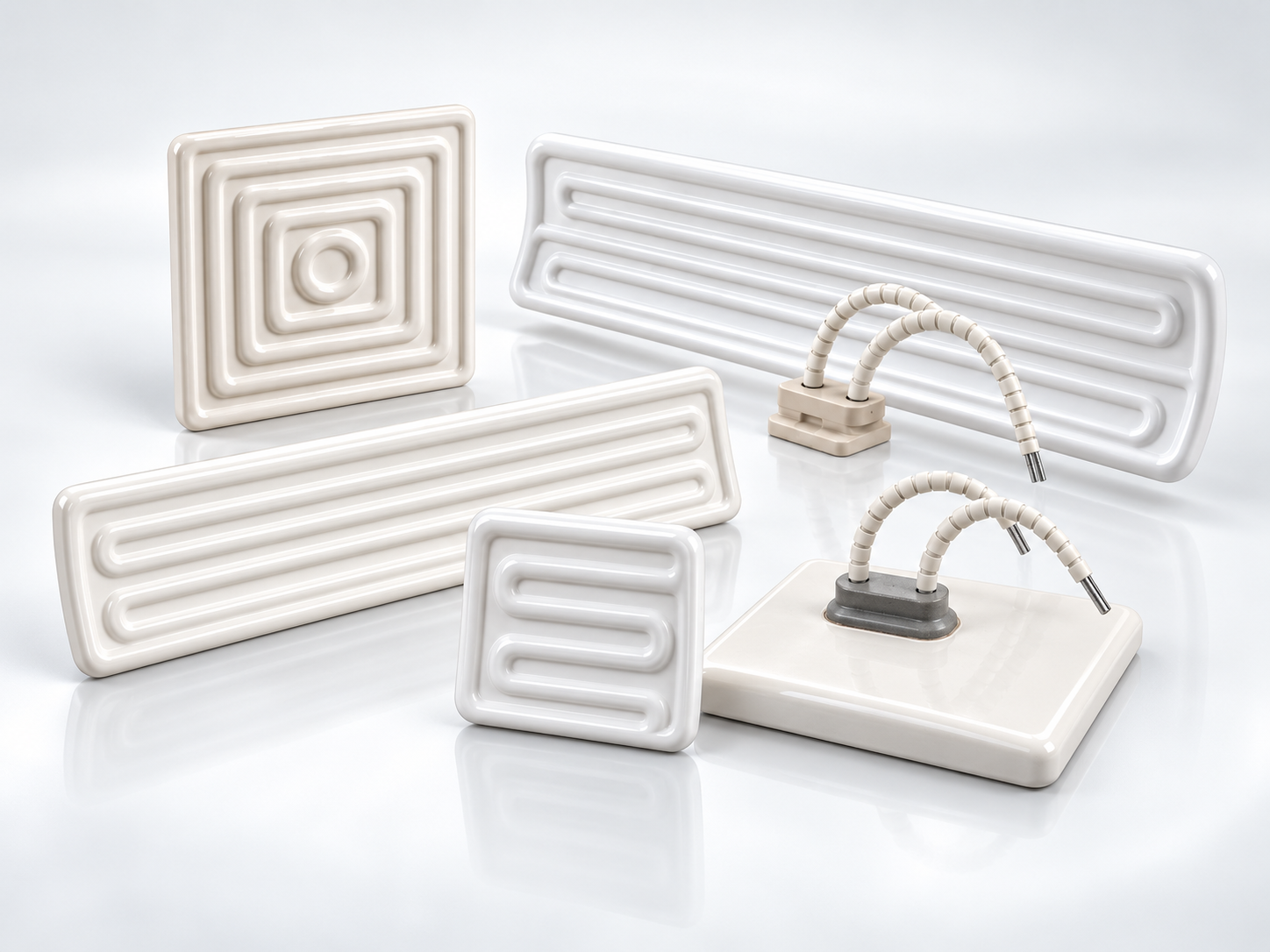
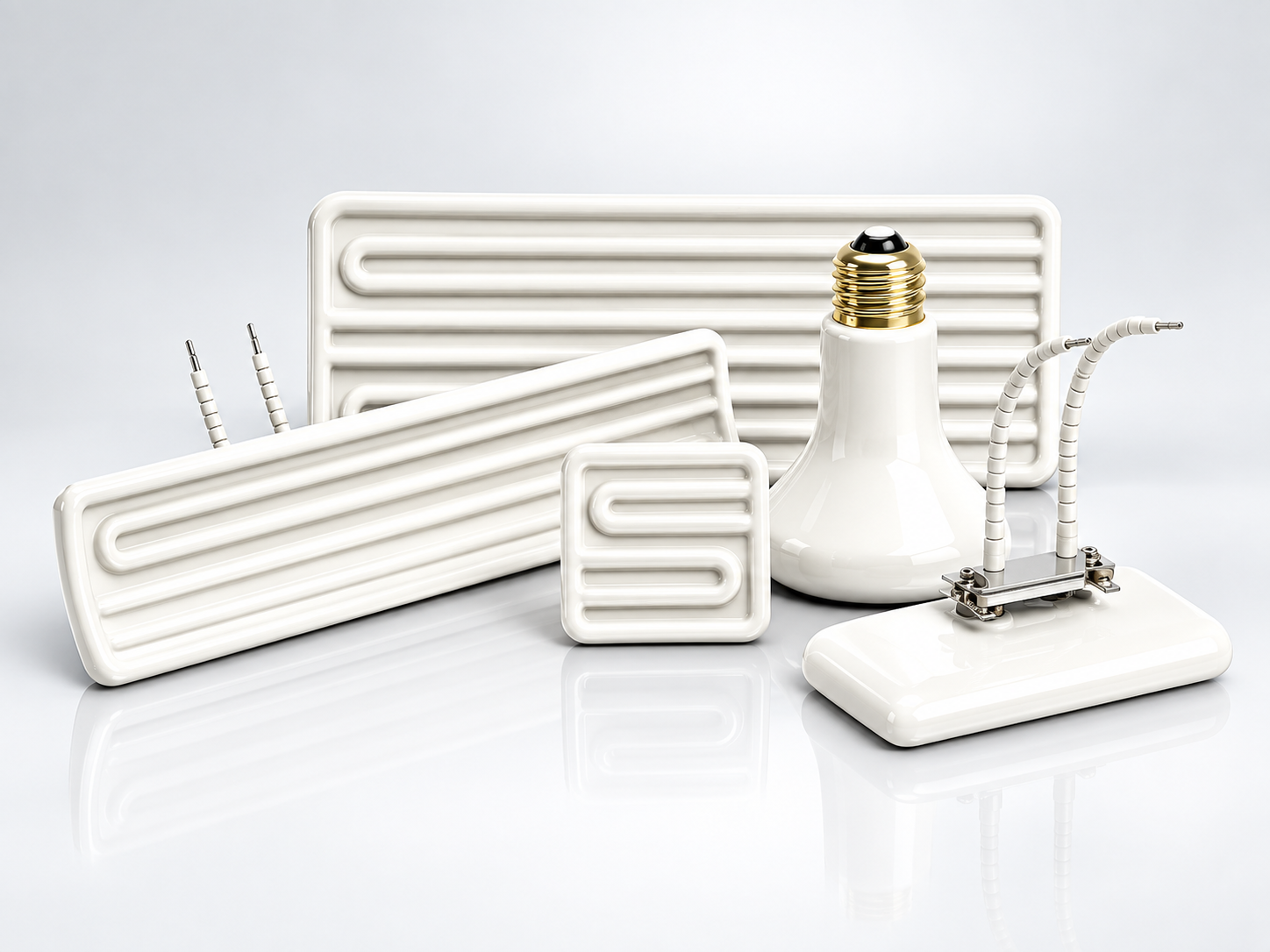
Radiant elements that heat the surface of the work directly, without heating the air in between. Trough and flat panel forms, with or without a reflector.
- 100 to 2000 WWattage range
- 230, 240 VVoltages
- Trough or flat panelElement forms
- 300 °CElement face temp
How it is built, and why that matters
A resistance coil is embedded in a moulded ceramic body. When the ceramic is hot it radiates in the medium wave infrared band, and that radiation crosses the gap and is absorbed at the surface of the work. The air in between is barely heated at all.
That is the whole argument for the technology. Where a convection oven has to bring the air, the enclosure and the fixtures up to temperature before the job gets hot, a radiant panel puts its energy where the job is.
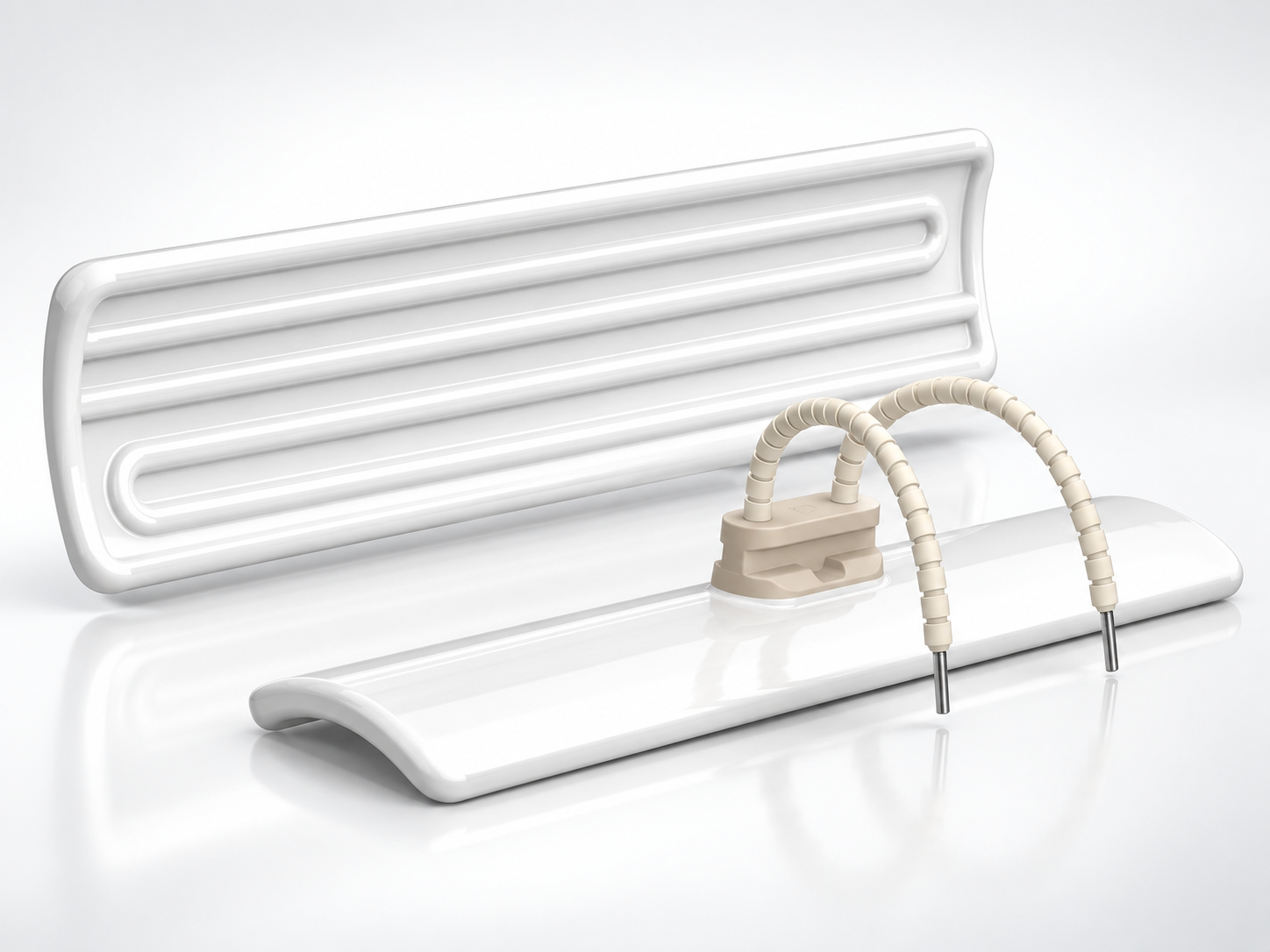
Element form controls the pattern. A trough concentrates the radiation into a band, a flat panel spreads it evenly over an area, and a reflector behind either of them sends back the half that would otherwise be lost.
Where this family sits on temperature
- 0
- 300
- 600
- 900
- 1200 °C
The upper limit is Swiftheat's confirmed rating from the specification table below. The lower end is indicative for this element type.
Technical data
| Property | Value |
|---|---|
| Element forms | Trough, flat panel |
| Wattage range | 100 to 2000 W |
| Standard voltages | 230, 240 V |
| Element face temperature | 300 °C |
| Peak wavelength | 3 to 6 µm |
| Inbuilt thermocouple | Type K, optional |
| Reflector | Optional, fitted |
| Typical working distance | 20 to 1000 mm, application dependent |
Dimensions
Every dimension we need in order to quote, named the same way on the drawing, in the table and in the enquiry form. A buyer should never have to guess what we call something.
| Input | Symbol | Note |
|---|---|---|
| Element form | - | Trough or flat panel |
| Wattage per element | W | And how many elements |
| Distance to the work | d | Face of the element to the surface |
| Target surface temperature | - | What the work has to reach |
| Material being heated | - | Absorption depends on the material |
| Line speed or dwell time | - | For continuous processes |
Key. d distance to the work
Options
Everything you can order, given a code, a description and a rating. No Indian heater manufacturer publishes this today. It is what turns a quotation phone call into a part number, and every code here is the code that appears on your requirement document.
Click a photograph to enlarge.
01 Element form
- FT
Trough
Concentrates the radiation into a band.
- FF
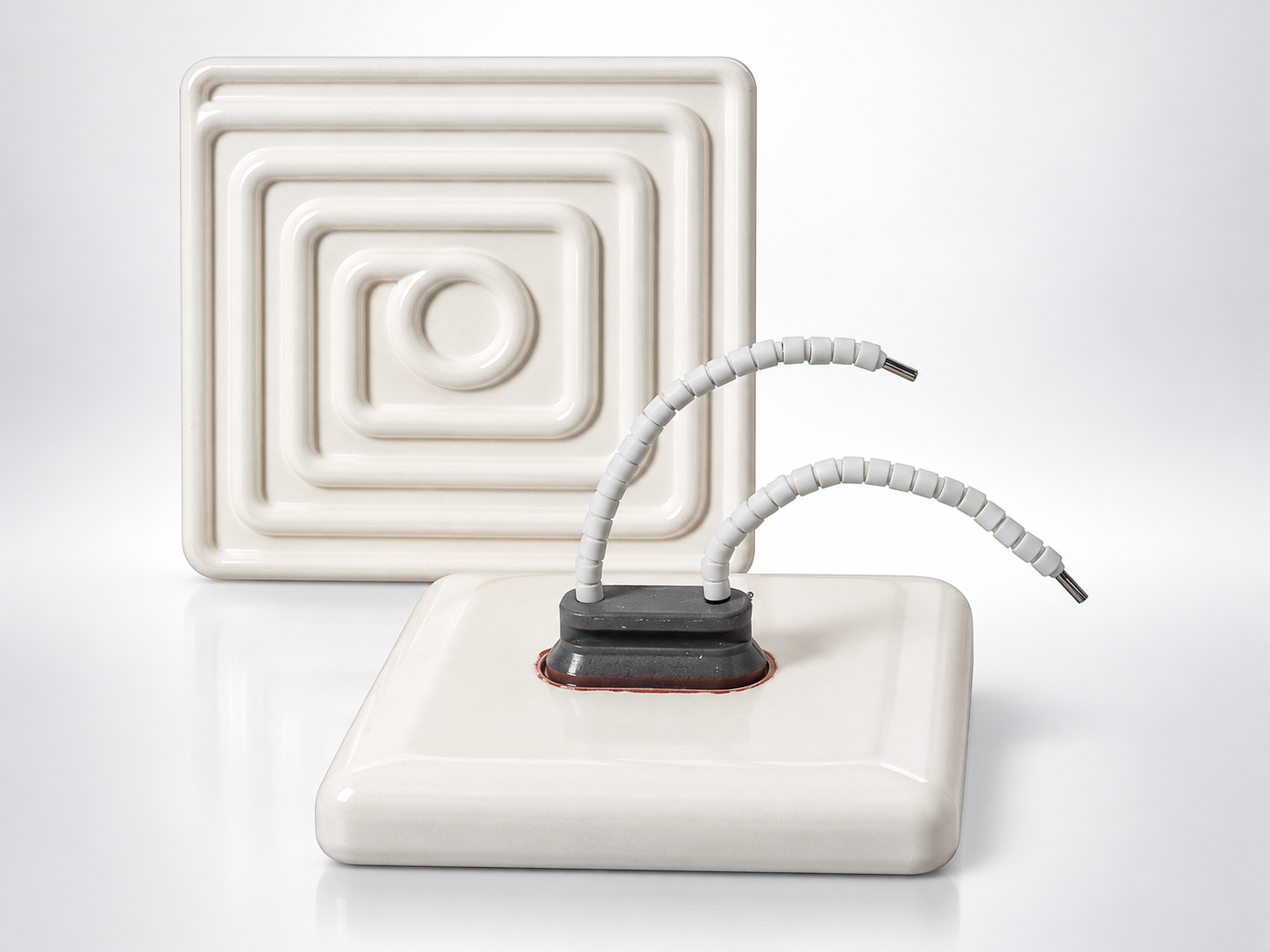
Flat panel
Even spread over an area.
02 Inbuilt thermocouple
- TC0
None
Control by power percentage or from a separate sensor.
- TCK
Type K
Closed loop control on the element face.
03 Reflector
- R0
None
Element only.
- R1
Fitted reflector
Directs the back radiation forward.
Frames, cassettes and multi element panels are made to order. Tell us the area to be covered and the target temperature and we will lay the elements out.
Choosing the right heater
Distance sets the intensity
Radiant intensity falls off sharply with distance. Halving the gap does far more than adding elements, and it is usually cheaper.
The material decides how much is absorbed
Two materials at the same distance under the same element will reach very different temperatures. Tell us what is being heated.
Control the element, or control the work
An inbuilt thermocouple holds the element face steady. Holding the work steady needs a sensor looking at the work. Say which one the process needs.
Why these fail early
Telling a buyer how a product fails is the most credible thing a manufacturer can publish, and it is the fastest way to stop the same failure arriving twice.
- Too far from the workThe commonest specification error. Output is fine, intensity at the surface is not.
- No reflectorHalf the radiation goes backwards into the frame.
- Thermal shockCold draught or splash onto a hot ceramic body cracks it.
- Wired without power controlFull on and full off cycling stresses the ceramic and overshoots the work.
Where these are used
Each one links to the industry page, which shows the heating zones on the machine and the element type for each zone.
- Blow MouldingPreform reheat, extrusion head and neck tooling heating for PET and extrusion blow lines.
- Packaging MachinerySealing bars, cutting and creasing tools, shrink tunnels and hot melt tanks.
- Food ProcessingTanks, sealing tools, dryers and jacketed lines, in plant that gets washed down.
- Pharmaceutical MachineryBlister and tube sealing, granulation drying, jacketed vessels and validated temperature measurement.
- Rubber and ElastomersCuring and vulcanising platens, extruder barrels and mould heating.
- Other Industrial HeatingOvens, tanks, ducts, pipes and surfaces, in plant that does not fit any of the categories above.
Related products
-
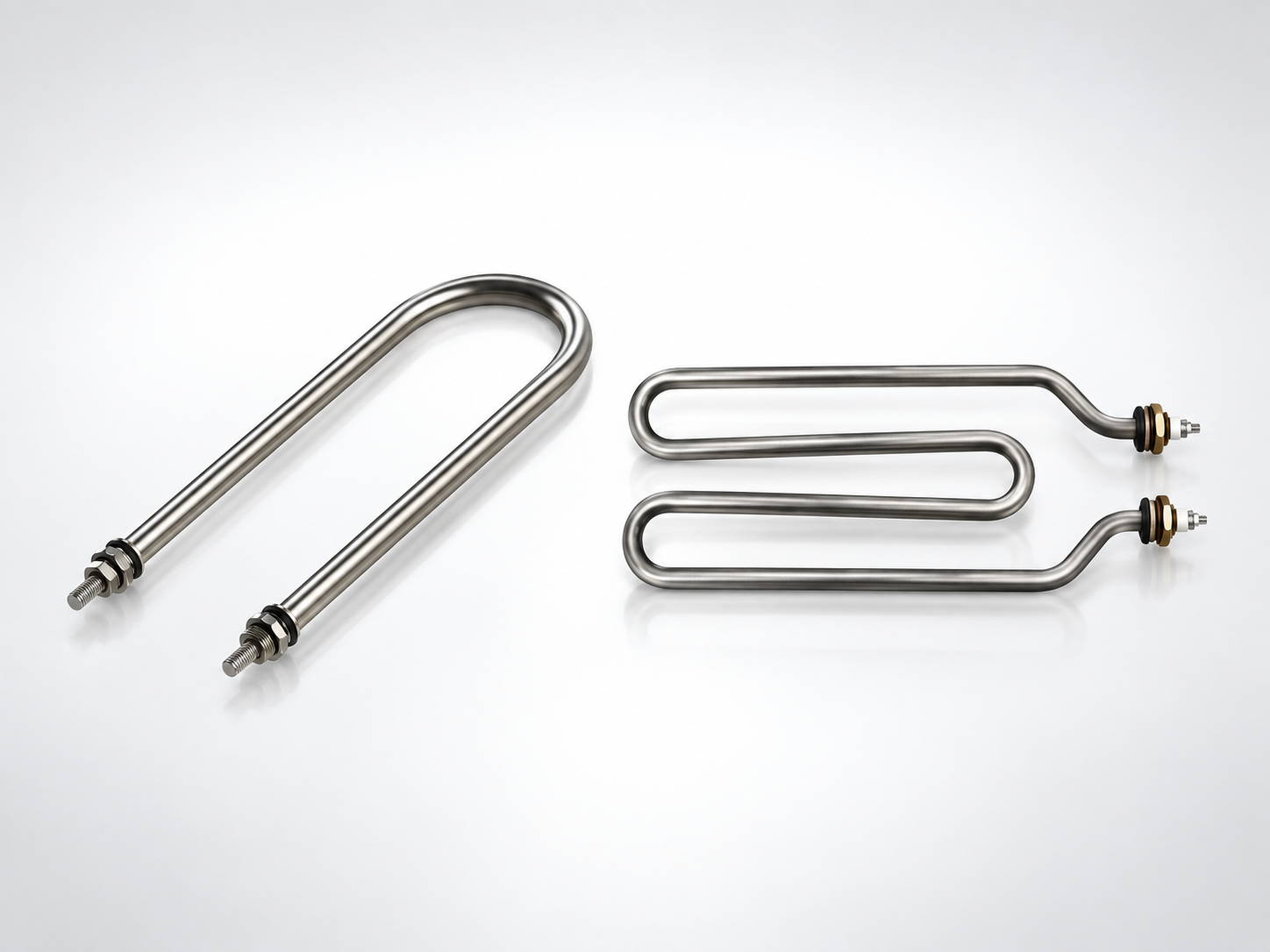 Tubular Heaters
Air, liquids and surfaces. Straight, U form, W form or coiled to your drawing.
Tubular Heaters
Air, liquids and surfaces. Straight, U form, W form or coiled to your drawing.
-
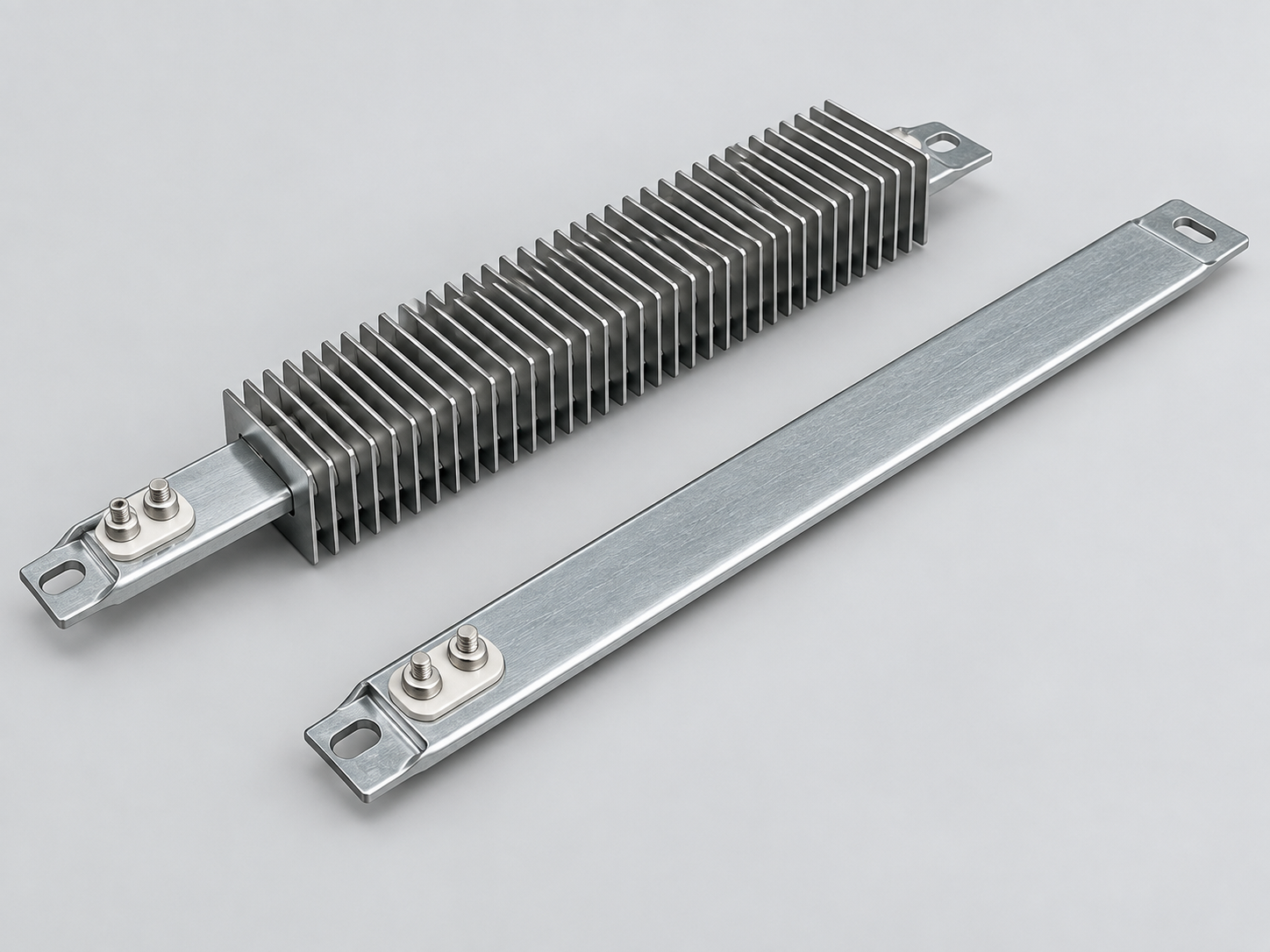 Strip Heaters
Flat and gently curved surfaces, sealing bars, platens and duct air.
Strip Heaters
Flat and gently curved surfaces, sealing bars, platens and duct air.
-
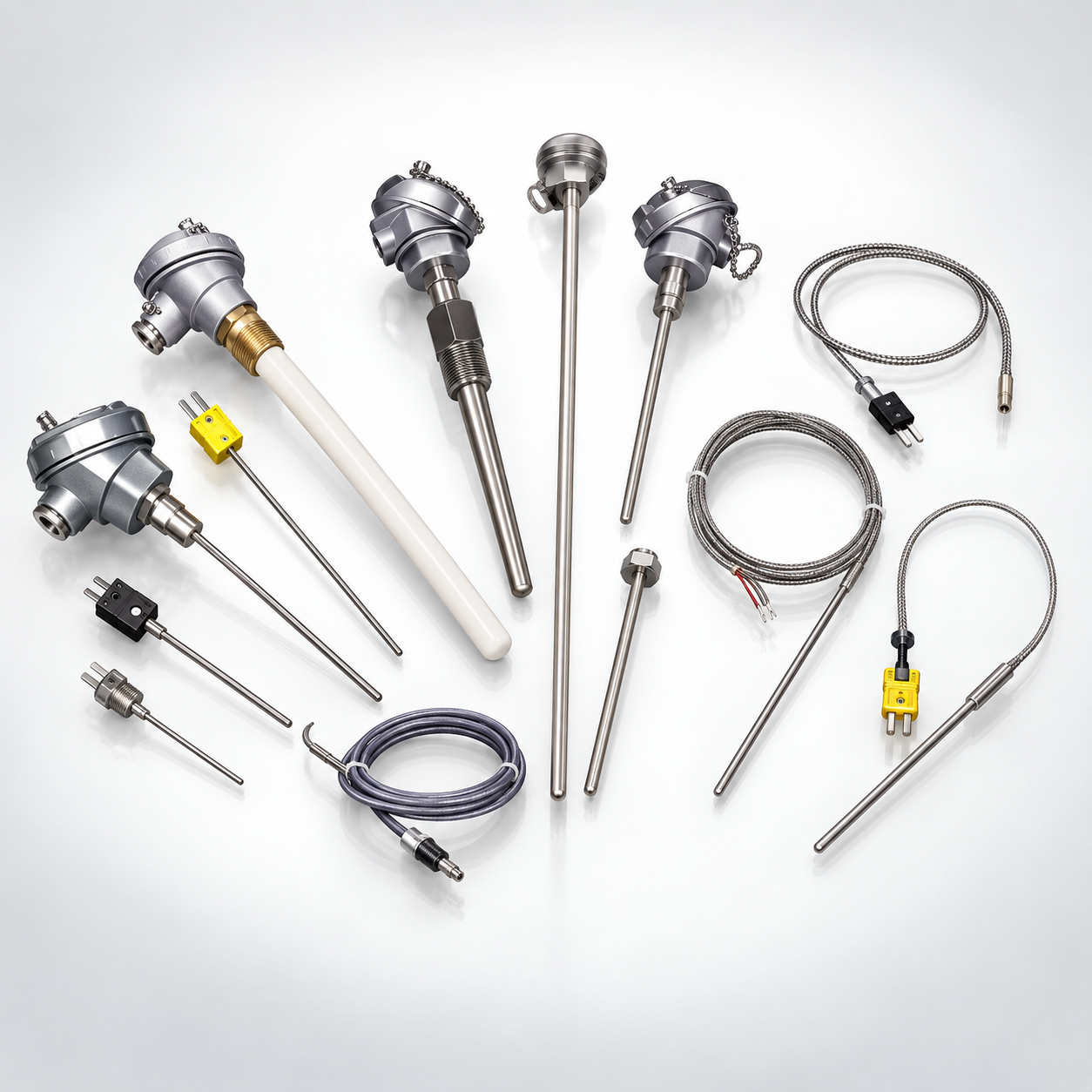 Thermocouples and Temperature Sensors
Types J, K, N, T, E, R, S, B and C, plus PT100, PT500 and PT1000 RTDs, made to length.
Thermocouples and Temperature Sensors
Types J, K, N, T, E, R, S, B and C, plus PT100, PT500 and PT1000 RTDs, made to length.
Request a quote for ceramic infrared heaters
Fill in what you know and leave the rest. The whole specification arrives at the works as a single readable email, and anything you leave blank our engineers will propose.