 Thermal Technologies
Product family
Coil Heaters
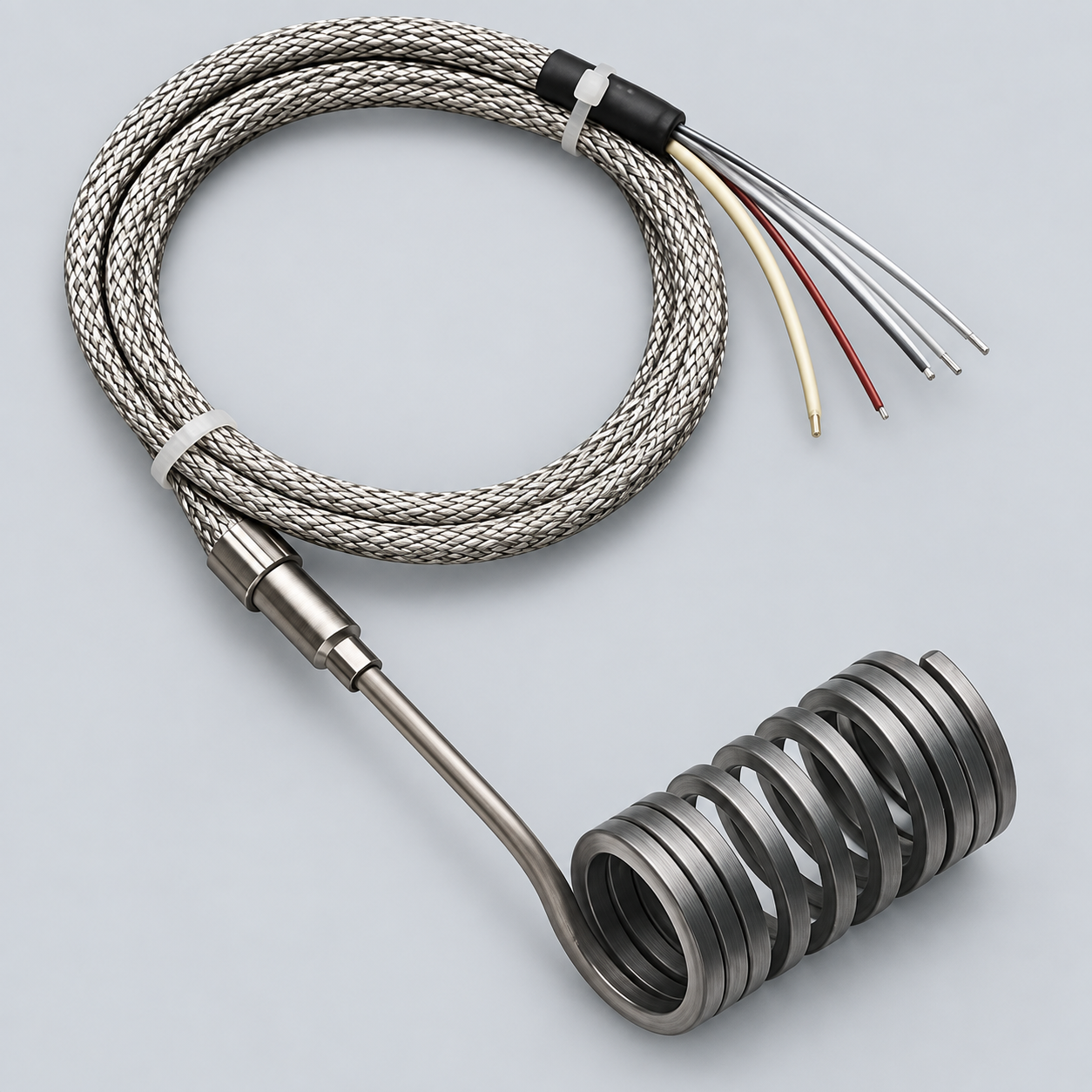
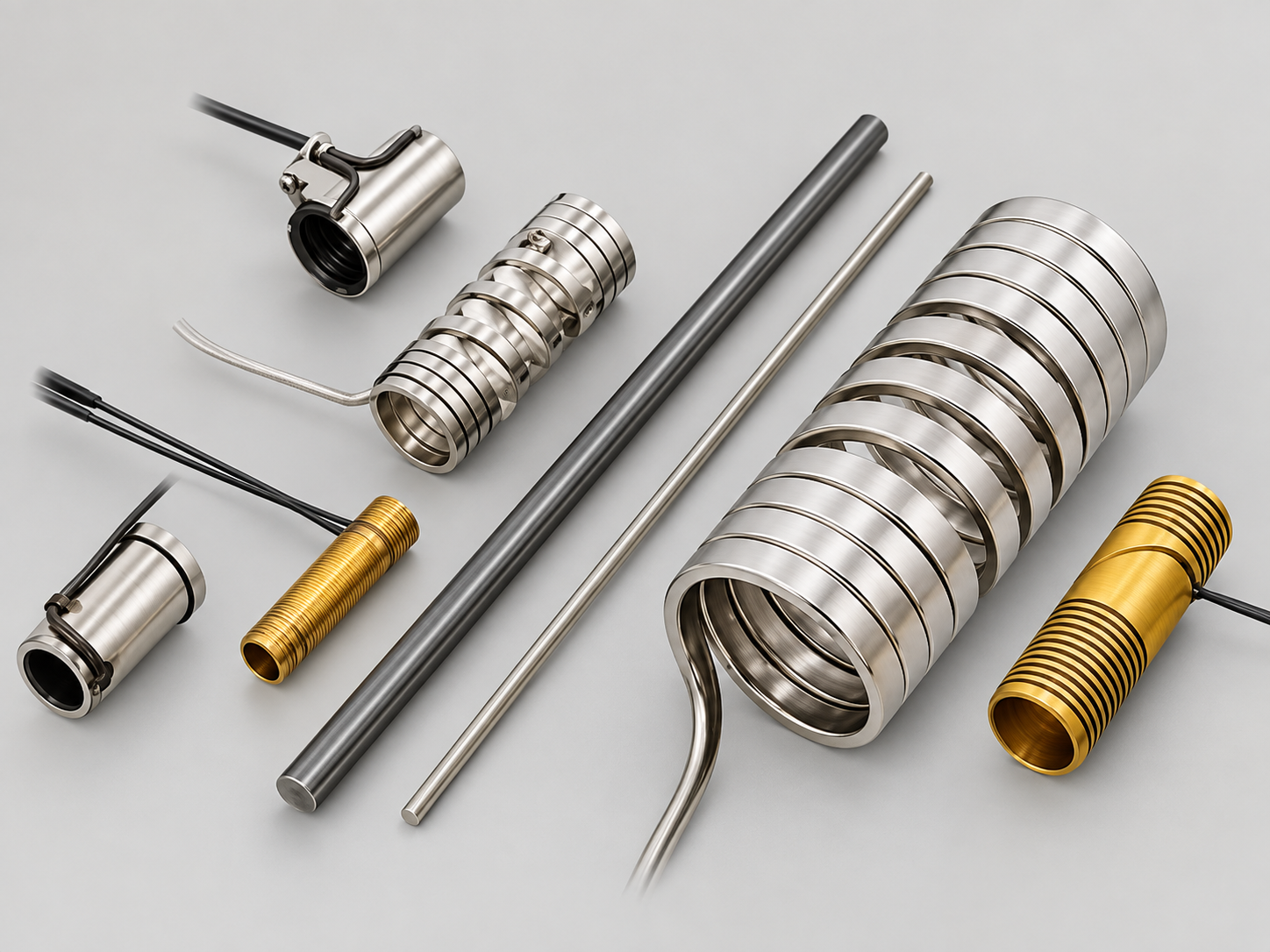
Spiral wound elements that wrap a nozzle or a manifold and put a high watt density into a very small area, with the thermocouple built into the coil.
- 15 to 50 mmInside diameter
- 300 to 1200 mmHeated length
- 200 to 1200 WWattage range
- 400 °CMax sheath temp
How it is built, and why that matters
A resistance conductor and its mineral insulation are drawn down inside a metal sheath, then the whole cable is wound into a close pitched spiral. The result is a heater that is mostly surface: almost all of it touches the part it is heating.
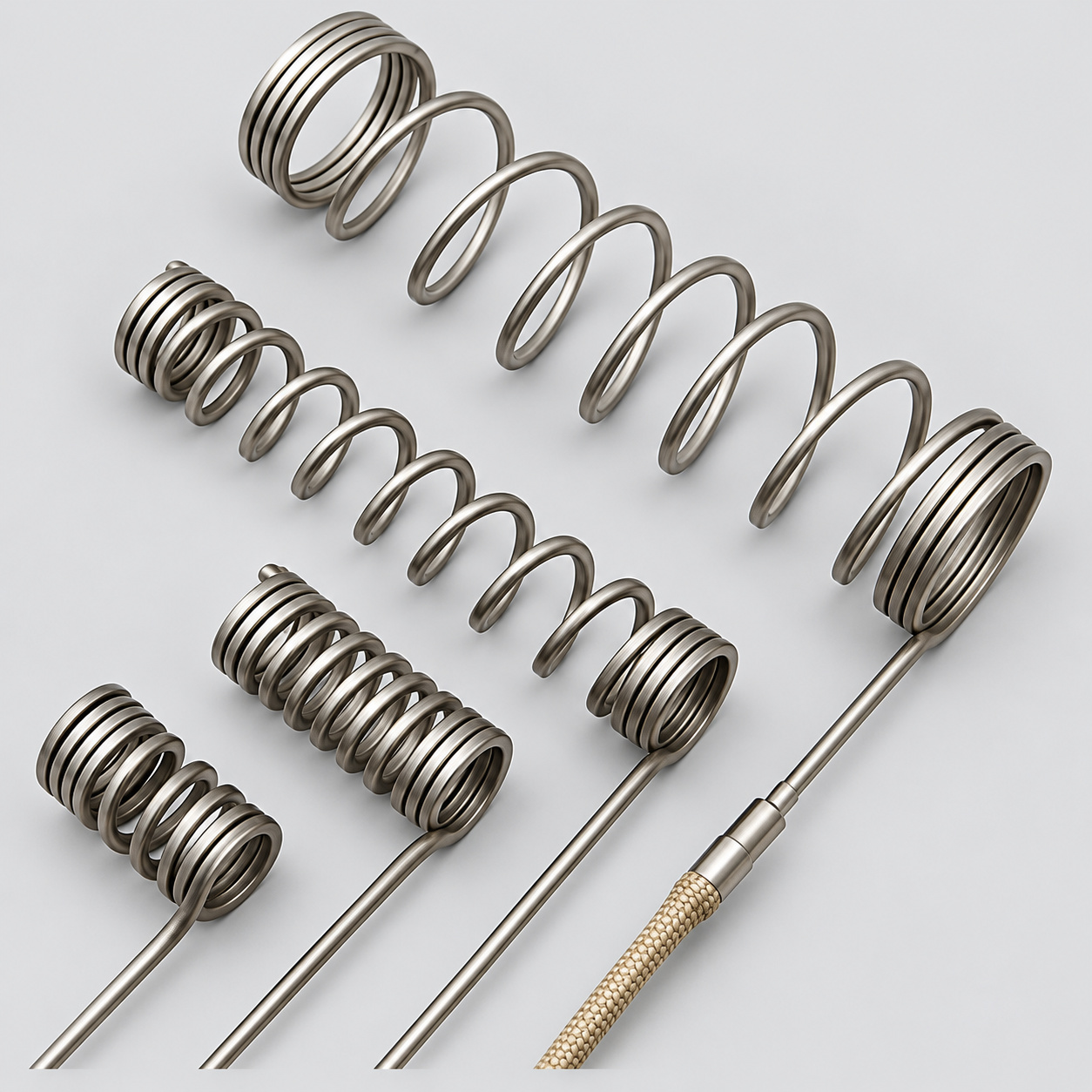
Profile is the decision that matters. A square or rectangular section sits flat against the nozzle and transfers heat through a face rather than a line, which is why hot runner work almost always specifies it. Round section is easier to wind to a tight radius.
Pitch can be varied along the length, so more turns can be placed where the heat is needed and fewer where it is not. That is how a manifold gets an even melt without hot spots at the ends.
These are the one family Swiftheat supplies rather than winds. The element is German made, and the standard item is a 2.2 by 4.2 mm section with Teflon leads, an inbuilt Type J thermocouple, a 900 mm black fibreglass sleeve and a ground wire. We say so because where a part is made is a fair question, and the answer here is not Peenya.
Where this family sits on temperature
- 0
- 300
- 600
- 900
- 1200 °C
The upper limit is Swiftheat's confirmed rating from the specification table below. The lower end is indicative for this element type.
Technical data
| Property | Value |
|---|---|
| Maximum sheath temperature | 400 °C |
| Maximum watt density | 60 W/sq in |
| Standard voltages | 110, 230, 240 V |
| Inside diameter range | 15 to 50 mm |
| Heated length range | 300 to 1200 mm |
| Wattage range | 200 to 1200 W |
| Profile sections offered | Round, square, rectangular |
| Standard stock section | 2.2 mm thick by 4.2 mm wide |
| Standard lead | Teflon insulated, with ground wire |
| Standard sleeve | 900 mm black fibreglass |
| Resistance tolerance | ± 10% |
| Thermocouple types | J and K, inbuilt. Type J on the standard item |
| Manufacture | German made element, supplied by Swiftheat |
Dimensions
Every dimension we need in order to quote, named the same way on the drawing, in the table and in the enquiry form. A buyer should never have to guess what we call something.
| Dimension | Symbol | Range |
|---|---|---|
| Inside diameter | ID | 15 to 50 mm |
| Heated length | HL | 300 to 1200 mm |
| Total length including cold ends | L | 20 to 200 mm |
| Coil pitch | P | State if profiled |
| Lead length | LL | State per end |
Key. ID inside diameter, HL heated length, P pitch, LL lead length
Options
Everything you can order, given a code, a description and a rating. No Indian heater manufacturer publishes this today. It is what turns a quotation phone call into a part number, and every code here is the code that appears on your requirement document.
Click a photograph to enlarge.
01 Profile
- PR
Round section
Round section wire. Easiest to wind to a tight radius.
- PS
Square section
Flat contact face, better transfer than round.
- PT
Rectangular section
Widest contact face. The usual hot runner choice.
02 Lead exit
- EA
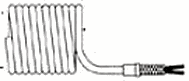
Axial
Leads leave along the axis of the coil.
- ER
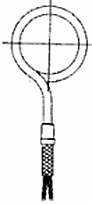
Radial
Leads leave out of the side.
- ET
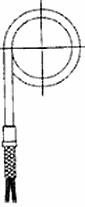
Tangential
Leads leave off the tangent, for tight manifold pockets.
03 Inbuilt thermocouple
- TC0
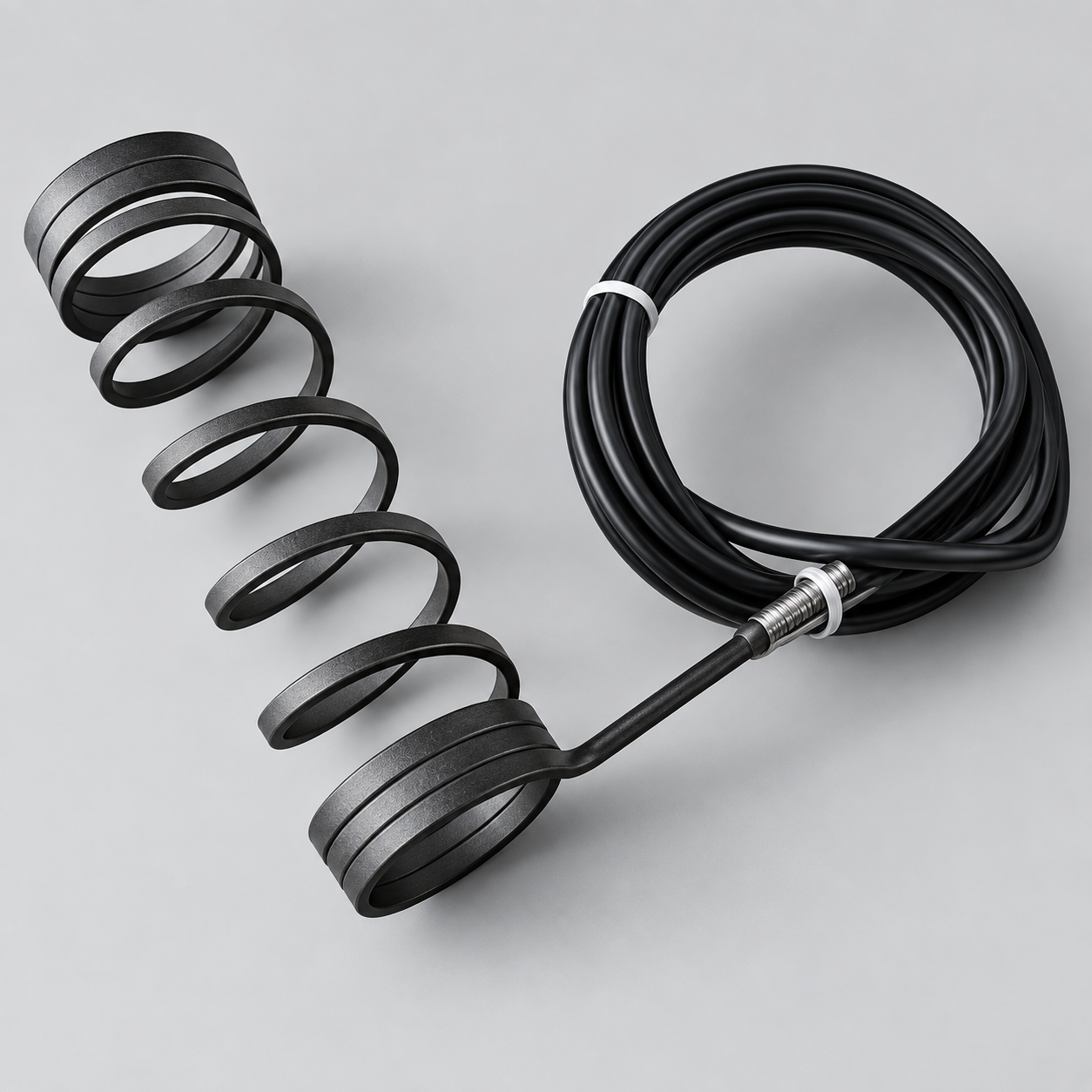
None
Control from a separate sensor.
- TCJ
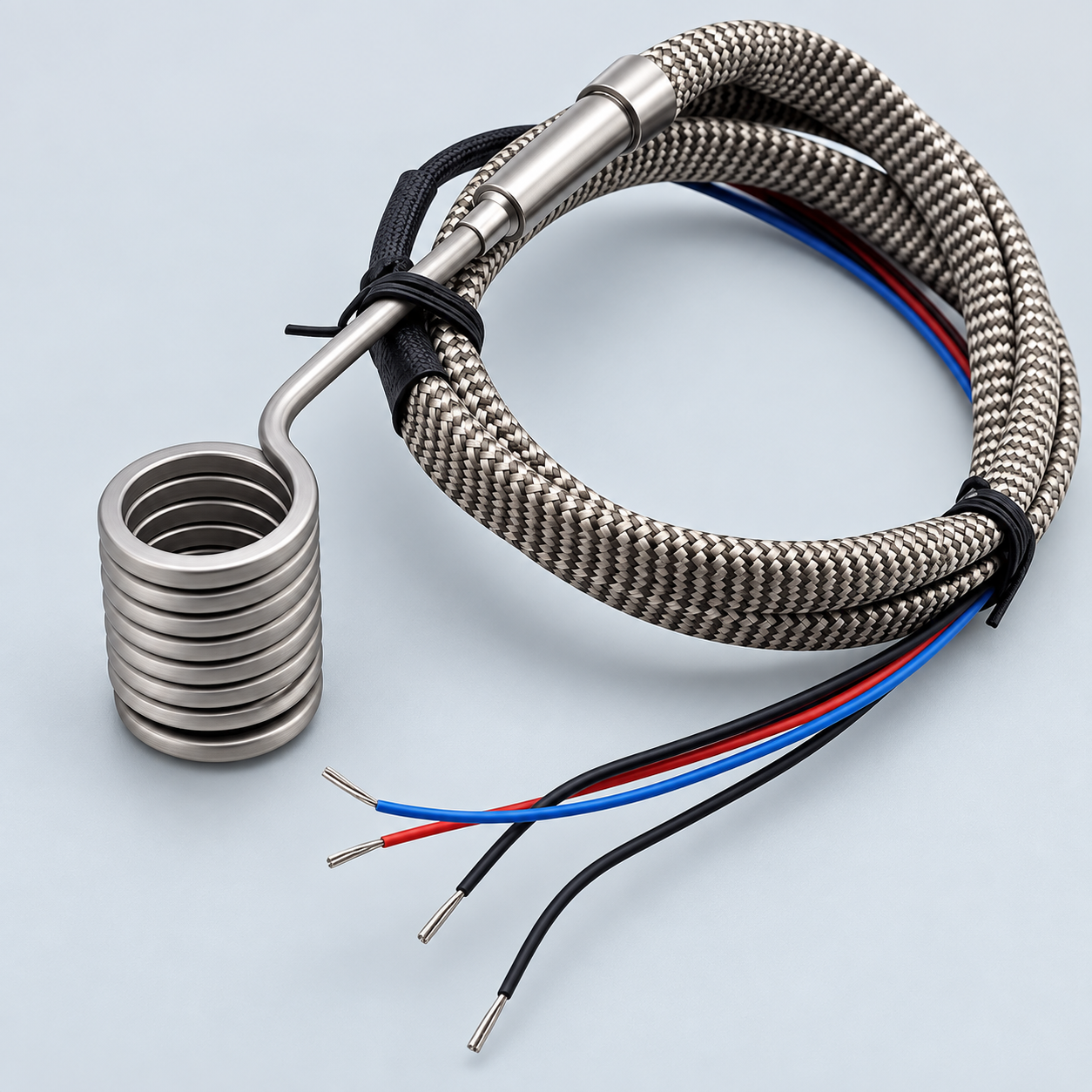
Type J
Iron constantan.
- TCK
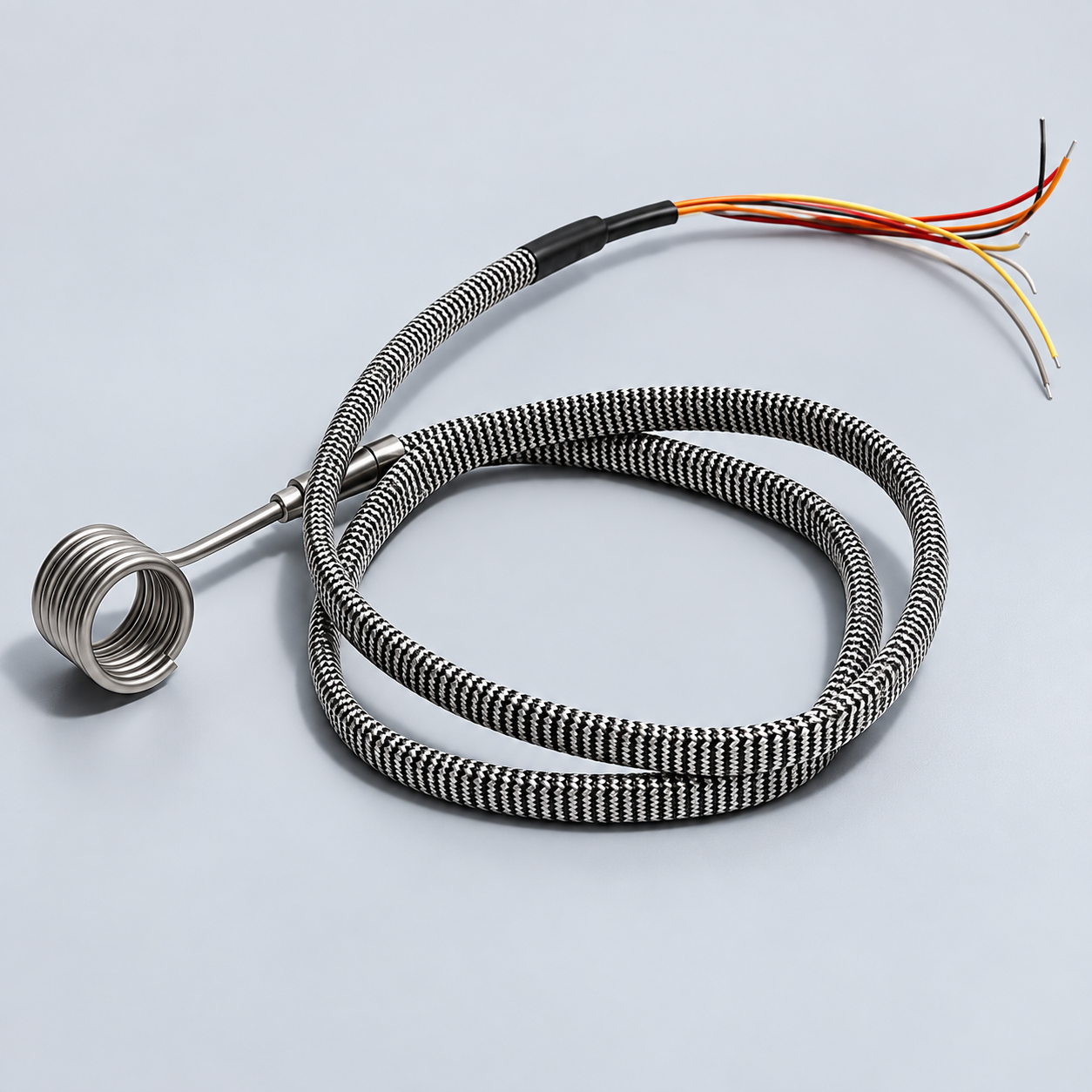
Type K
Higher range than Type J.
State which end the leads leave from, and whether a reflection tube or sleeve is required. The standard stock item is a 2.2 by 4.2 mm section with Teflon leads, an inbuilt Type J thermocouple, a 900 mm black fibreglass sleeve and a ground wire.
Choosing the right heater
Match the bore, not the nominal size
A coil heater works by contact. Give us the actual measured diameter of the nozzle or the pocket, not the drawing's nominal, and say whether it is worn.
Profile the pitch where the heat is lost
Ends lose heat into the surrounding steel. Closing the pitch at the ends and opening it in the middle gives a flatter melt profile than a single evenly wound coil at the same wattage.
Put the thermocouple where the control needs it
An inbuilt thermocouple reads the heater, not the melt. Tell us where the junction must sit along the coil, and we will place it there.
Why these fail early
Telling a buyer how a product fails is the most credible thing a manufacturer can publish, and it is the fastest way to stop the same failure arriving twice.
- Loose wrapAny air gap between coil and nozzle traps heat in the element.
- Wrong profileRound section on a face that needed rectangular contact runs hotter for the same output.
- Lead exit foulingThe exit direction was not stated, so the leads foul the manifold plate on assembly.
- Overtightened on fittingForcing a coil down a nozzle deforms the section and cracks the insulation.
- Thermocouple in the wrong placeThe controller holds a temperature the melt never sees.
Where these are used
Each one links to the industry page, which shows the heating zones on the machine and the element type for each zone.
Related products
-
 Ceramic and Mica Band and Nozzle Heaters
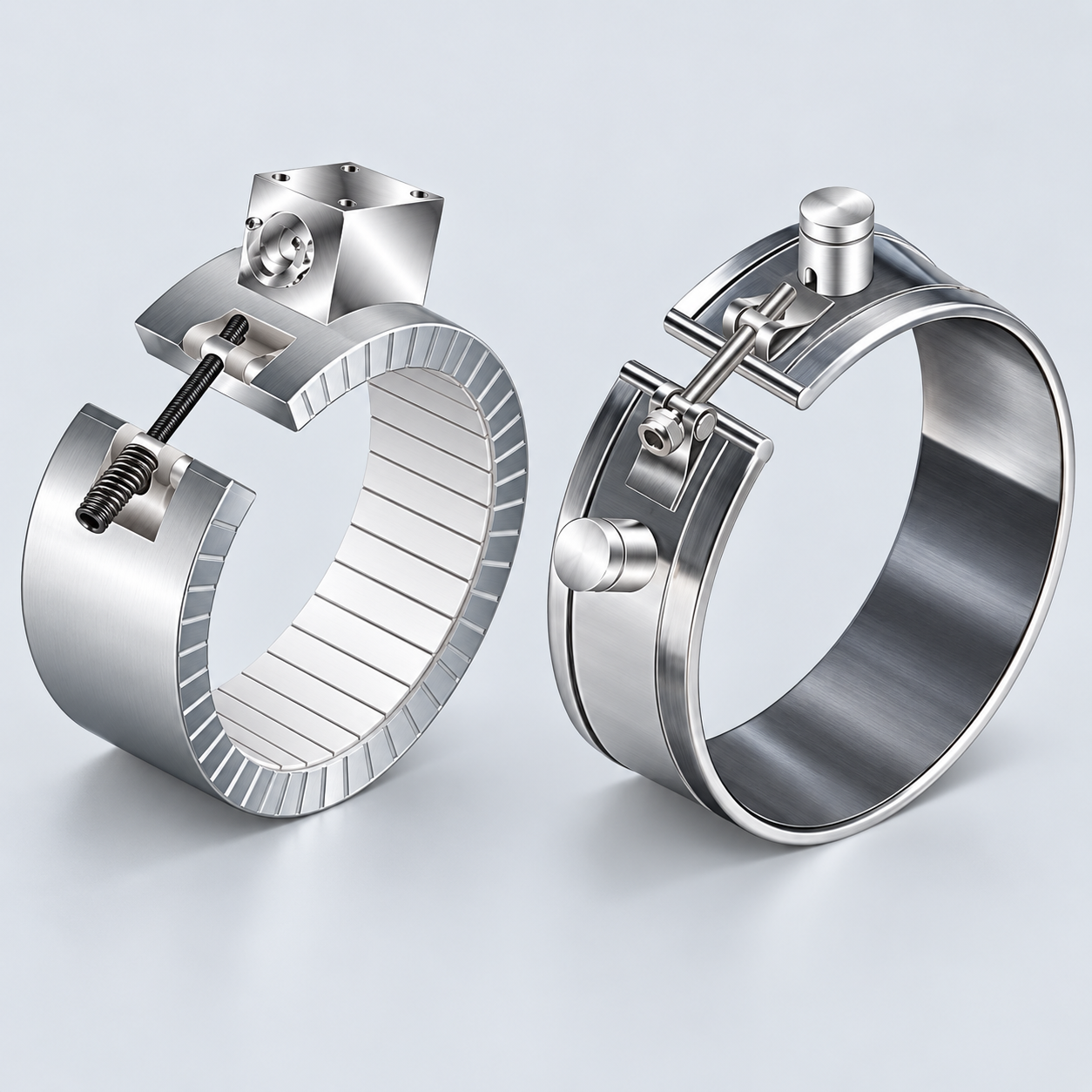
Barrels, cylinders, pipes and injection nozzles. One piece, split, expandable or partial coverage.
Ceramic and Mica Band and Nozzle Heaters
Barrels, cylinders, pipes and injection nozzles. One piece, split, expandable or partial coverage.
-
 Cartridge Heaters
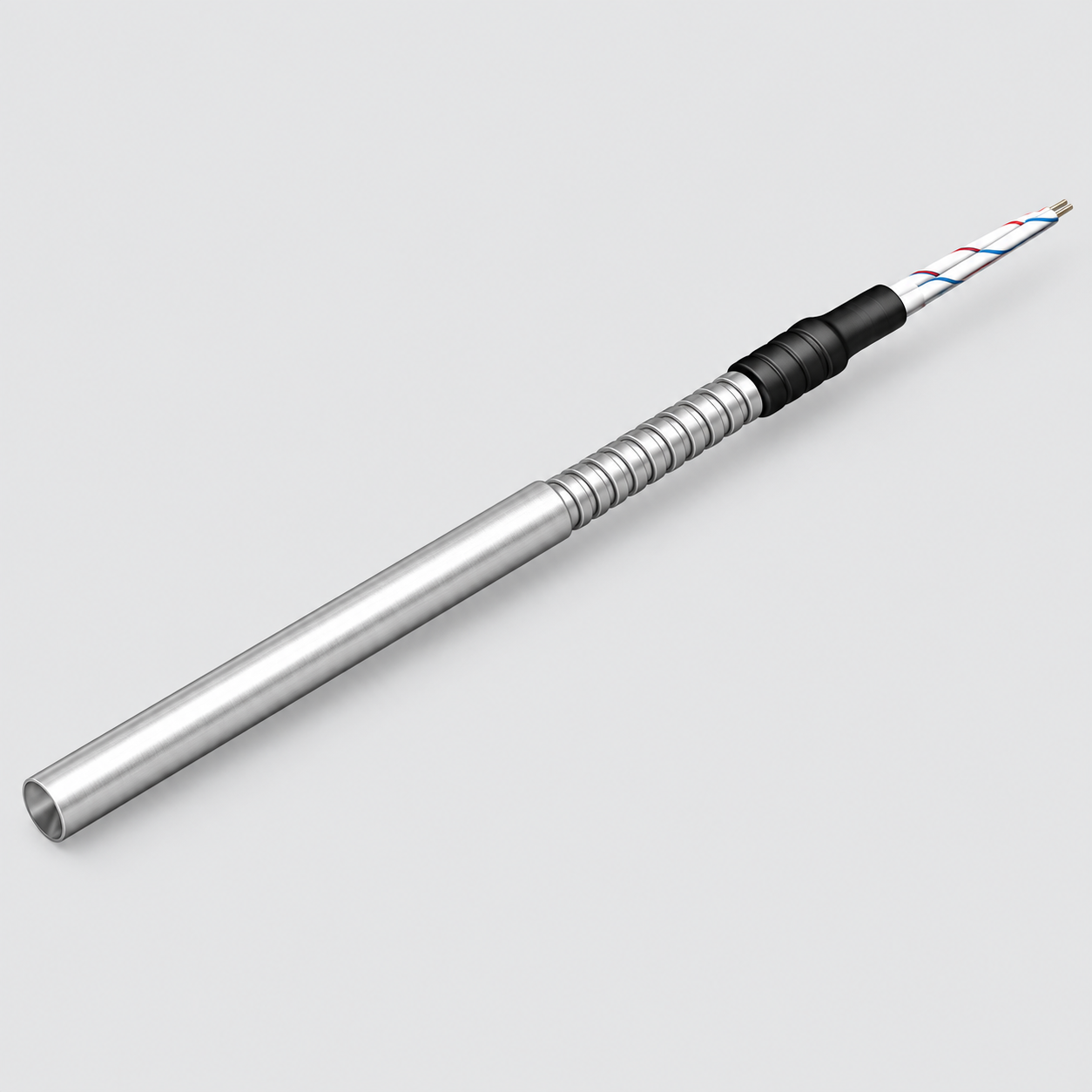
Bore mounted in moulds, platens and dies. Round, swaged, made to your length.
Cartridge Heaters
Bore mounted in moulds, platens and dies. Round, swaged, made to your length.
-
 Thermocouples and Temperature Sensors
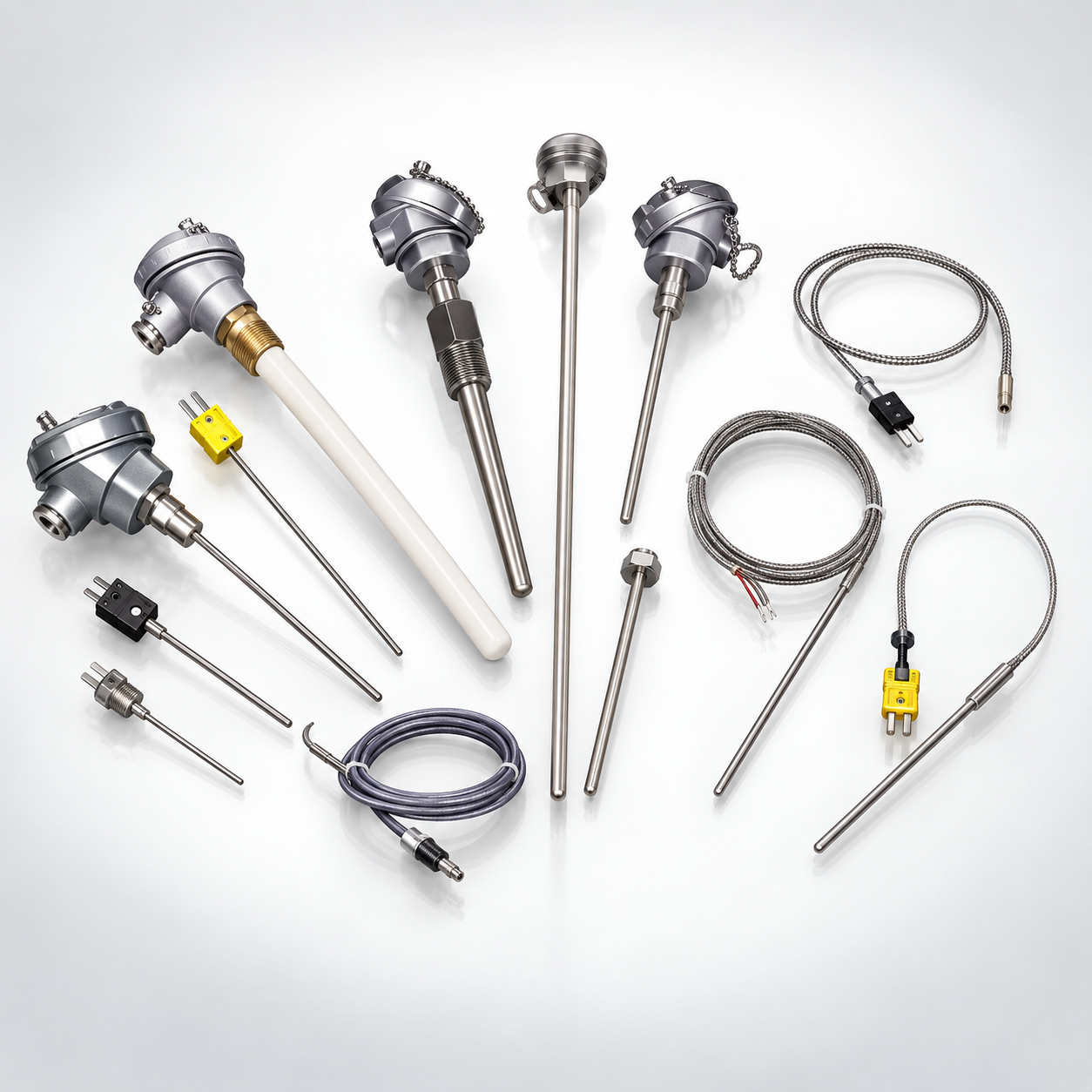
Types J, K, N, T, E, R, S, B and C, plus PT100, PT500 and PT1000 RTDs, made to length.
Thermocouples and Temperature Sensors
Types J, K, N, T, E, R, S, B and C, plus PT100, PT500 and PT1000 RTDs, made to length.
Request a quote for coil heaters
Fill in what you know and leave the rest. The whole specification arrives at the works as a single readable email, and anything you leave blank our engineers will propose.