 Thermal Technologies
Product family
Strip Heaters
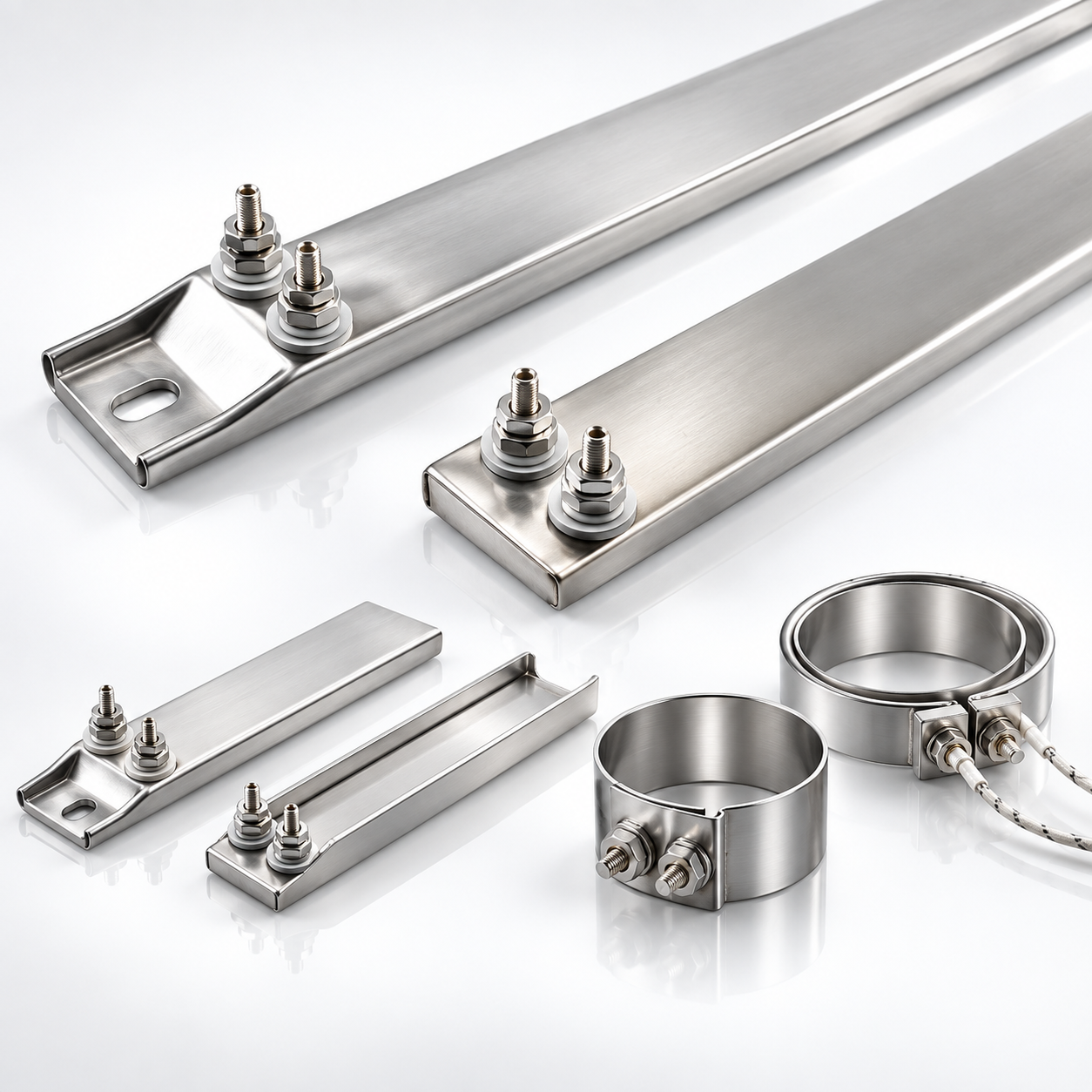
Flat elements bolted to a plate, a platen or a sealing bar, in plain form for conduction and finned form for moving air.
- 60 to 2000 mmLength range
- 20 to 150 mmWidth range
- 100 to 6000 WWattage range
- 350 °CMax sheath temp
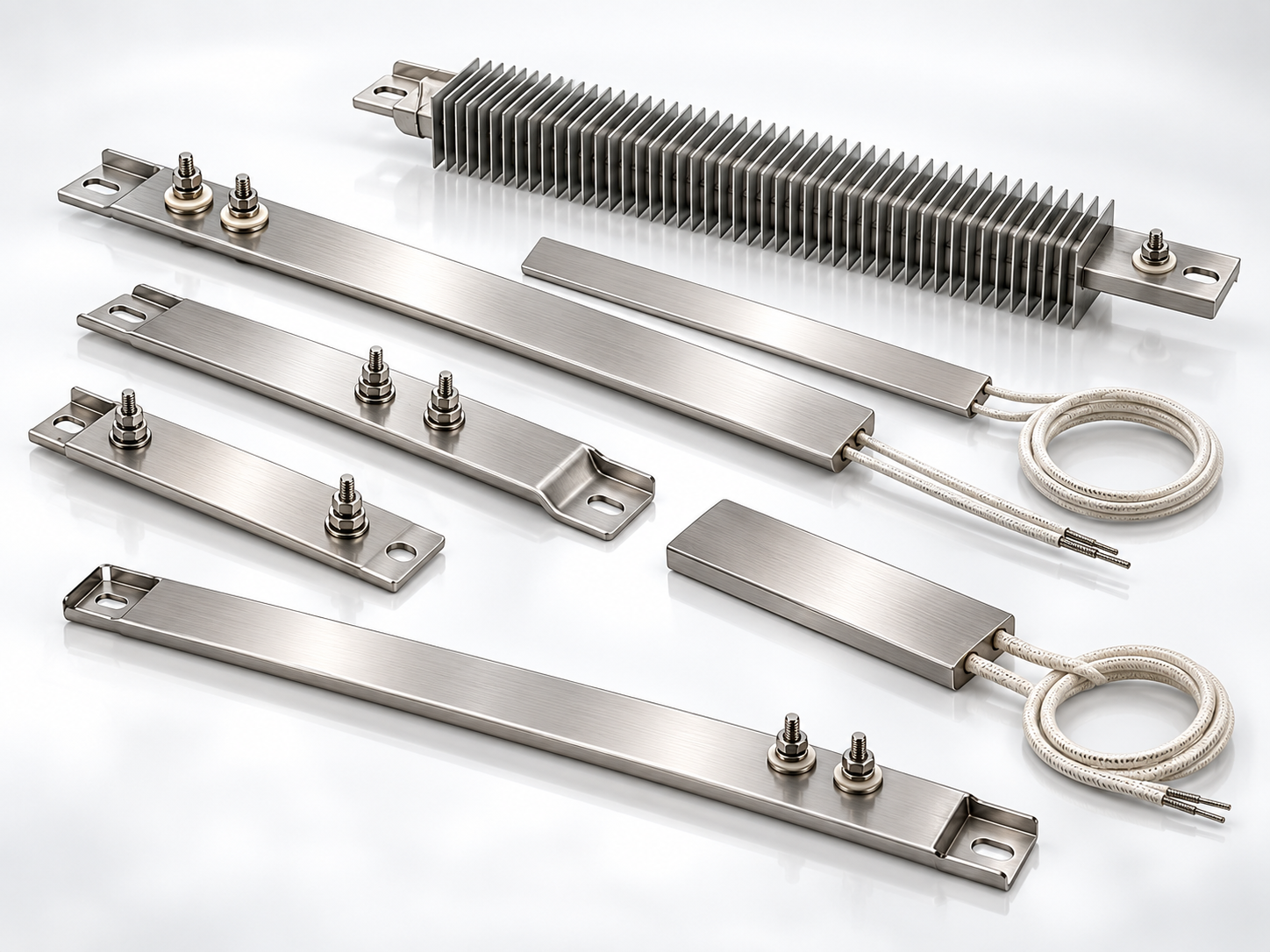
How it is built, and why that matters
Resistance ribbon is wound over a mica or ceramic former, insulated, and pressed into a flat metal case. The case is the working surface, so how flat it is and how hard it is clamped decide how much of the heat actually reaches the job.
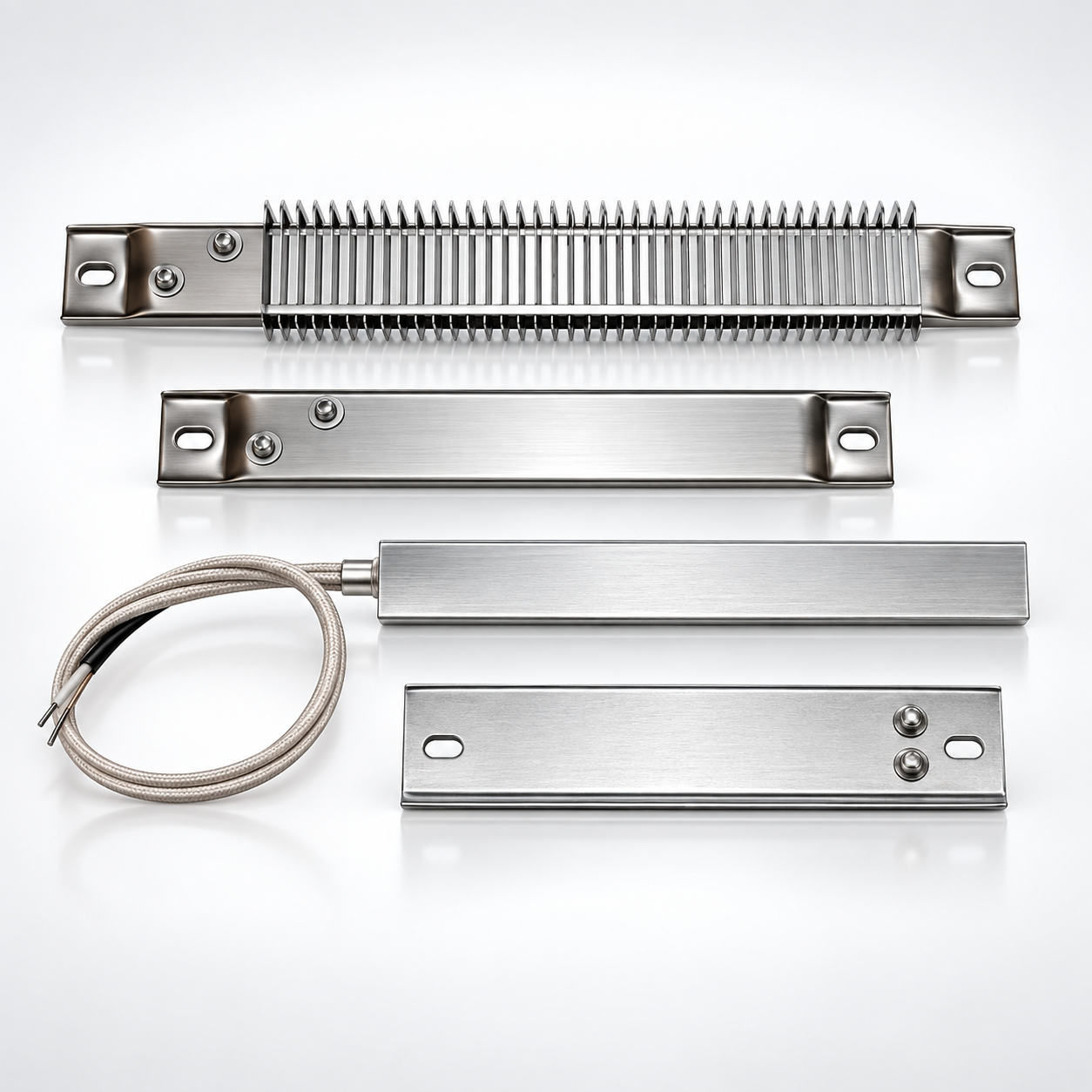
Finned versions carry pressed steel fins on the back of the case. Fins are for air: they multiply the surface the element can shed heat from, which is what keeps the sheath temperature down when there is no metal to conduct into.
Mounting holes, slots and the position of the terminals are all made to your drawing, because a strip heater that does not line up with the existing holes in a sealing bar is scrap.
Where this family sits on temperature
- 0
- 300
- 600
- 900
- 1200 °C
The upper limit is Swiftheat's confirmed rating from the specification table below. The lower end is indicative for this element type.
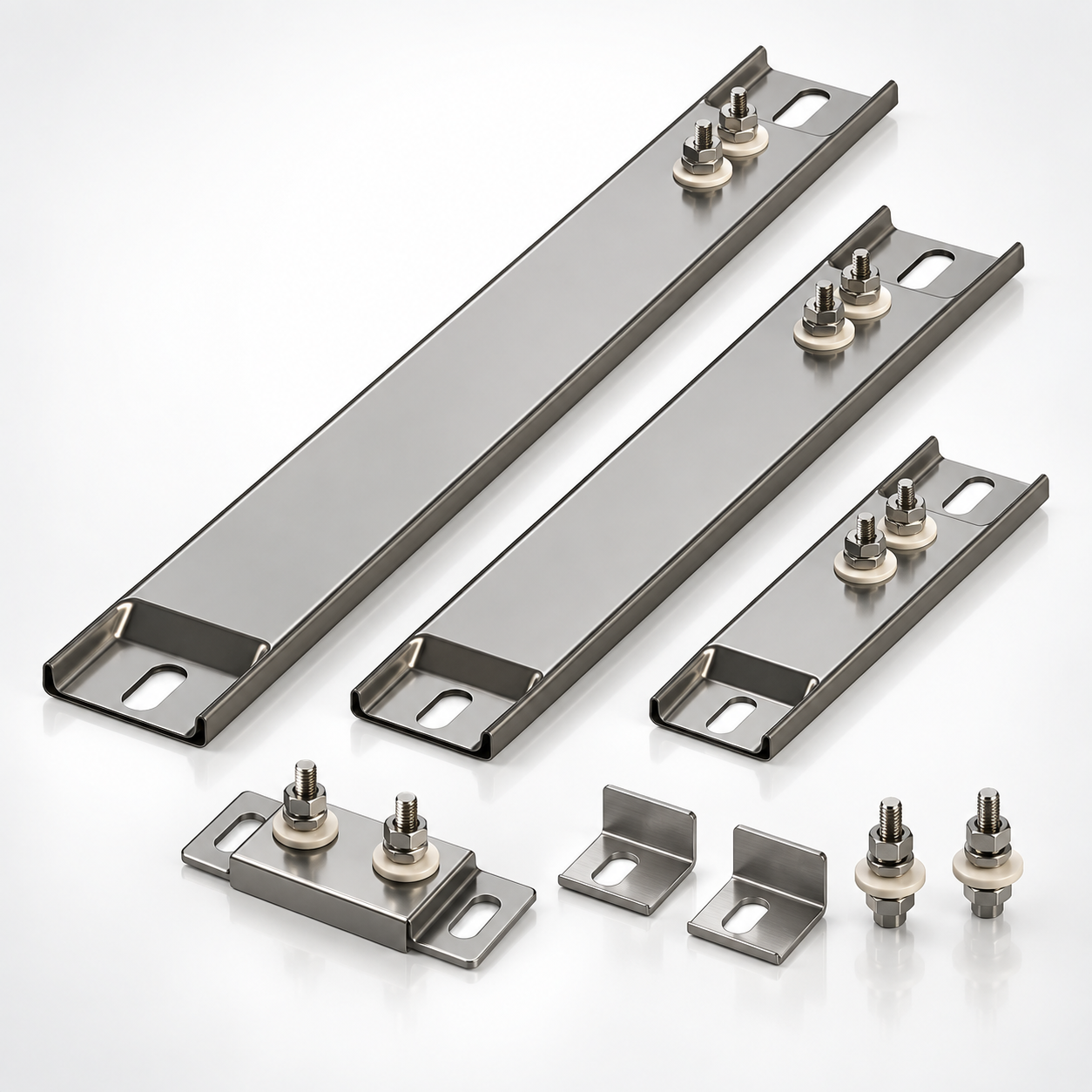
Technical data
| Property | Plain | Finned |
|---|---|---|
| Maximum sheath temperature | 350 °C | 350 °C |
| Maximum watt density | 30 W/sq in | 40 W/sq in |
| Standard voltages | 230, 240, 415 V | 230, 240, 415 V |
| Length range | 60 to 2000 mm | 60 to 2000 mm |
| Width range | 20 to 150 mm | 20 to 150 mm |
| Wattage range | 100 to 6000 W | 100 to 6000 W |
| Typical duty | Clamped to metal | Free air and ducts |
| Mounting holes | To your drawing | To your drawing |
Dimensions
Every dimension we need in order to quote, named the same way on the drawing, in the table and in the enquiry form. A buyer should never have to guess what we call something.
| Dimension | Symbol | Note |
|---|---|---|
| Length | L | Overall, including any cold ends |
| Width | W | Across the case |
| Thickness | T | Standard section |
| Mounting hole diameter | d | And quantity |
| Hole positions | - | From a stated datum end |
| Terminal position | - | Which end, or centre |
Key. L length, W width, T thickness, d hole diameter
Options
Everything you can order, given a code, a description and a rating. No Indian heater manufacturer publishes this today. It is what turns a quotation phone call into a part number, and every code here is the code that appears on your requirement document.
Click a photograph to enlarge.
01 Profile
- F0
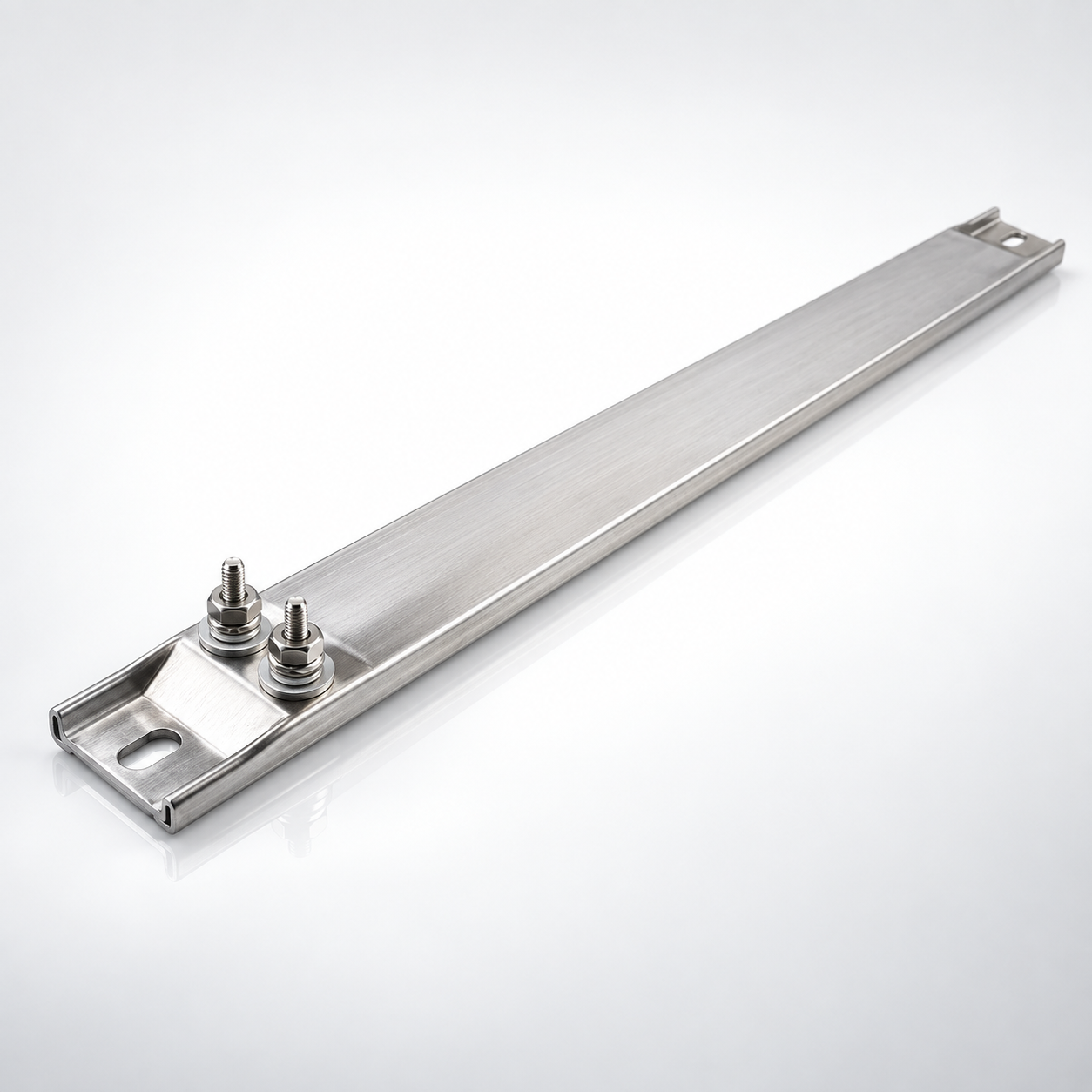
Plain
Flat case, for clamping to metal.
- F1
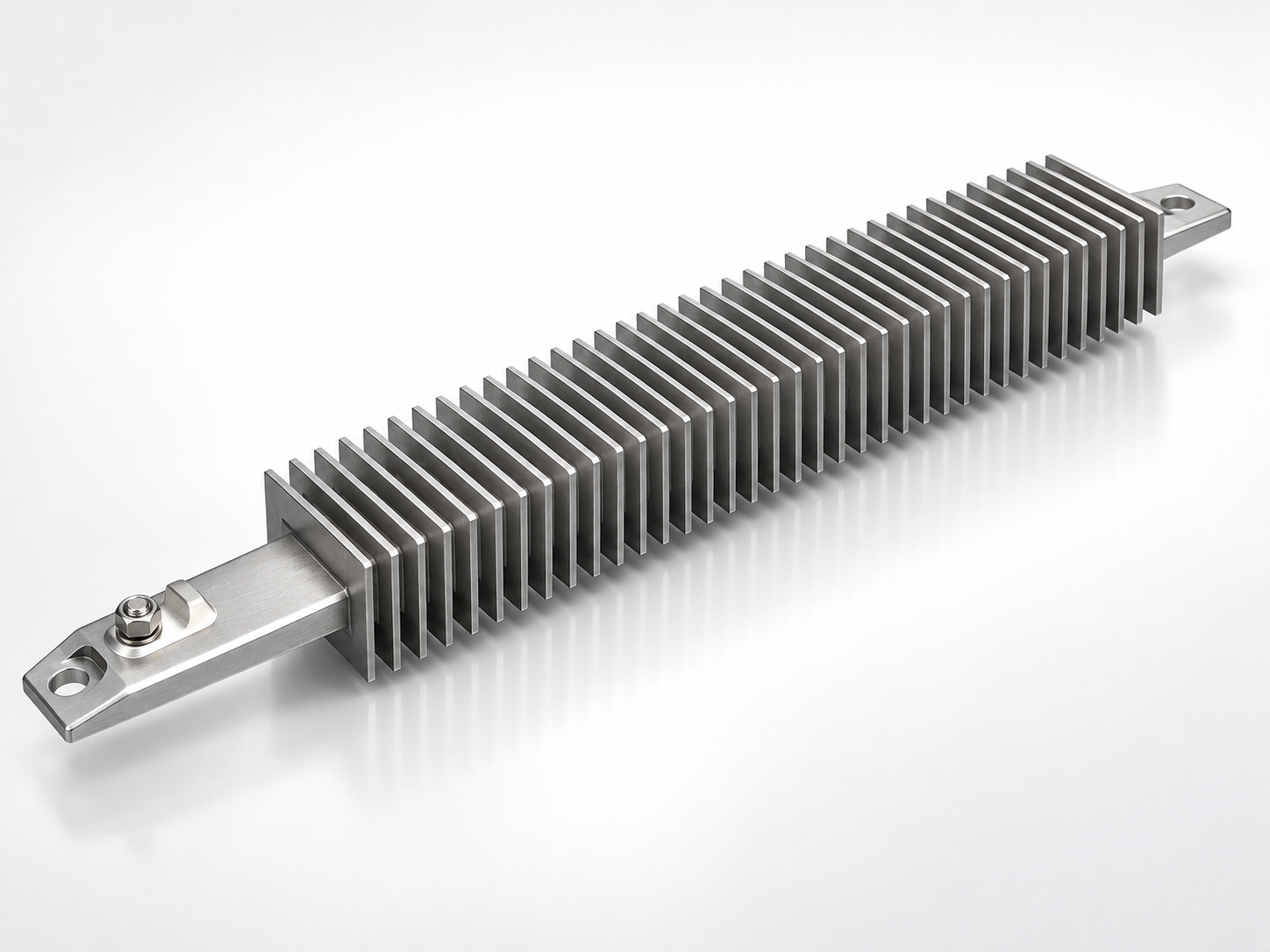
Finned
Fins on the back, for heating air.
02 Termination
- S1
Screw terminals
Exposed screw posts at one end.
- S3
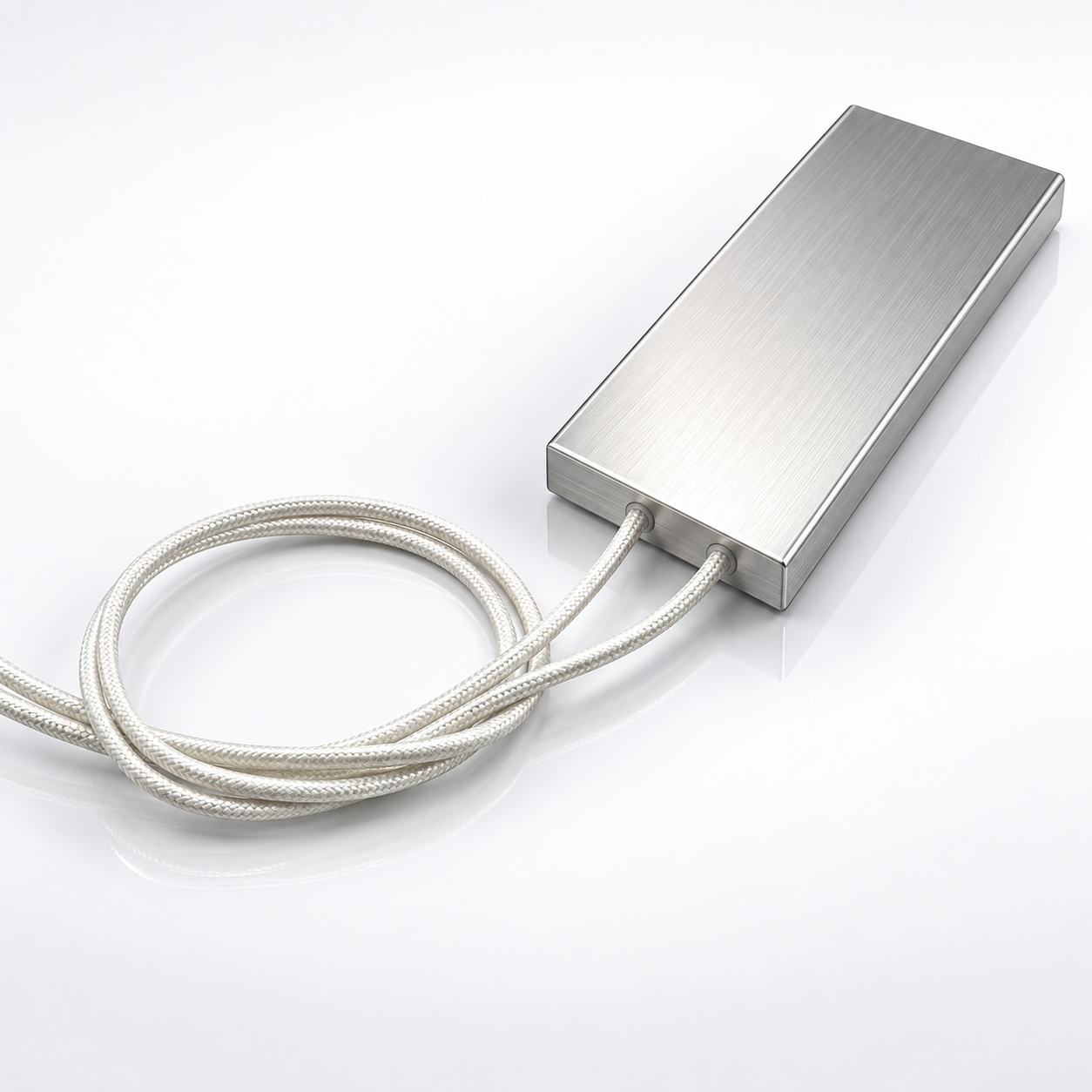
Flying leads
Leads with the protection of your choice.
Sheath material, hole pattern and any bend or curve are quoted from your drawing.
Choosing the right heater
Clamped or free air changes everything
The same element run bolted to a platen and run hanging in air will not survive the same watt density. Tell us which it is.
Flatness is a specification
A strip heater bolted at the ends onto a surface that is not flat touches at two points. Say if the mounting face is machined or as cast.
Give us the hole pattern, not the old part number
Old part numbers do not travel between suppliers. A dimensioned sketch of the hole positions does, and it is faster to quote from.
Why these fail early
Telling a buyer how a product fails is the most credible thing a manufacturer can publish, and it is the fastest way to stop the same failure arriving twice.
- Bolted to an uneven faceContact at two points only, so the middle of the element overheats.
- Fins choked with dustA finned heater in a dusty plant loses the surface it depends on.
- Over tightened boltsThe case deforms and the internal insulation cracks.
- Terminals in the hot zoneTerminals positioned where the process heat reaches them.
Where these are used
Each one links to the industry page, which shows the heating zones on the machine and the element type for each zone.
- ExtrusionBarrel, adapter and die head heating for pipe, profile, sheet and film lines.
- Packaging MachinerySealing bars, cutting and creasing tools, shrink tunnels and hot melt tanks.
- Die and MouldHot stamping dies, press platens and mould preheat, where the heater lives inside the tool.
- Food ProcessingTanks, sealing tools, dryers and jacketed lines, in plant that gets washed down.
- Pharmaceutical MachineryBlister and tube sealing, granulation drying, jacketed vessels and validated temperature measurement.
- Rubber and ElastomersCuring and vulcanising platens, extruder barrels and mould heating.
- Other Industrial HeatingOvens, tanks, ducts, pipes and surfaces, in plant that does not fit any of the categories above.
Related products
-
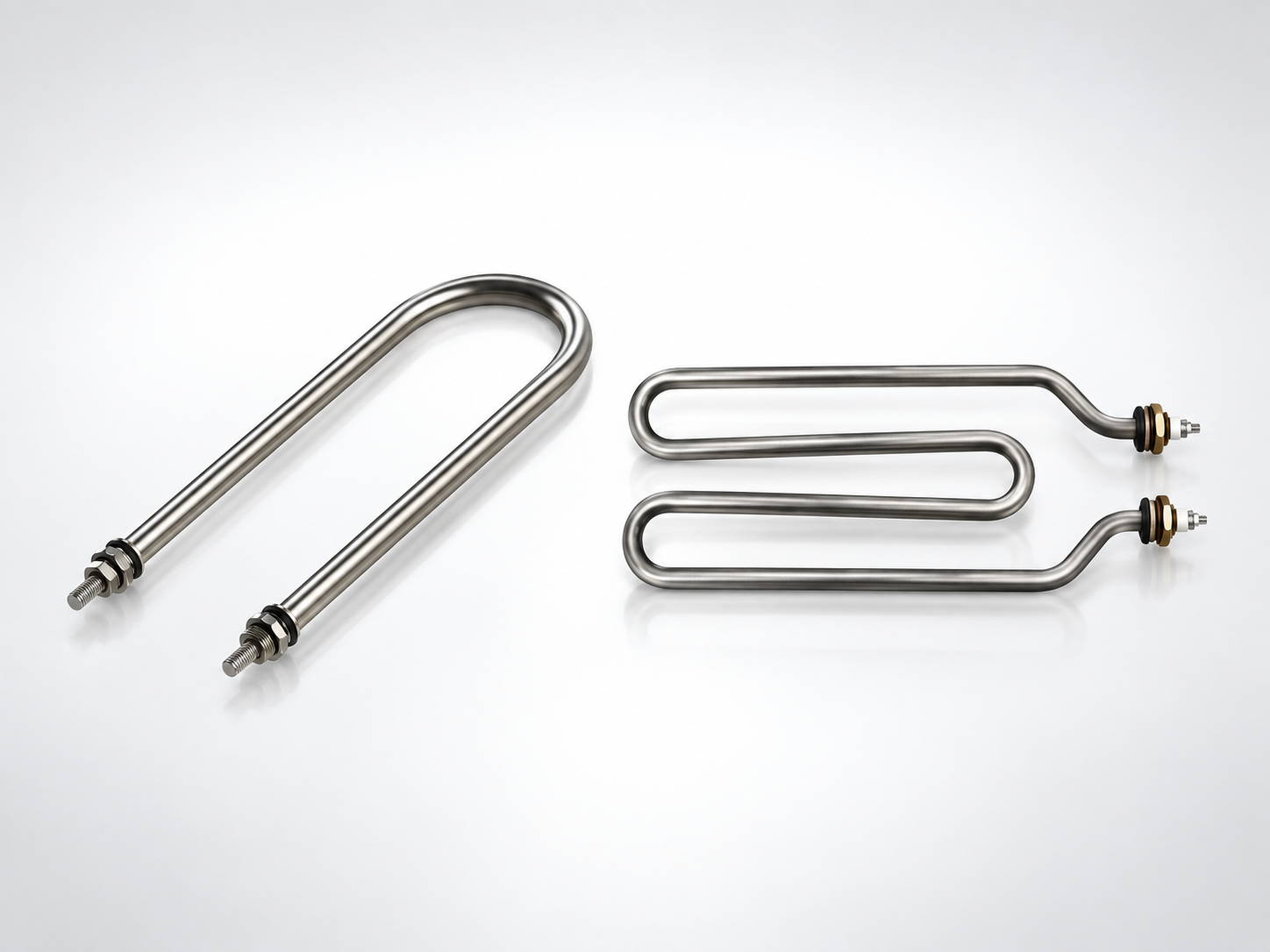 Tubular Heaters
Air, liquids and surfaces. Straight, U form, W form or coiled to your drawing.
Tubular Heaters
Air, liquids and surfaces. Straight, U form, W form or coiled to your drawing.
-
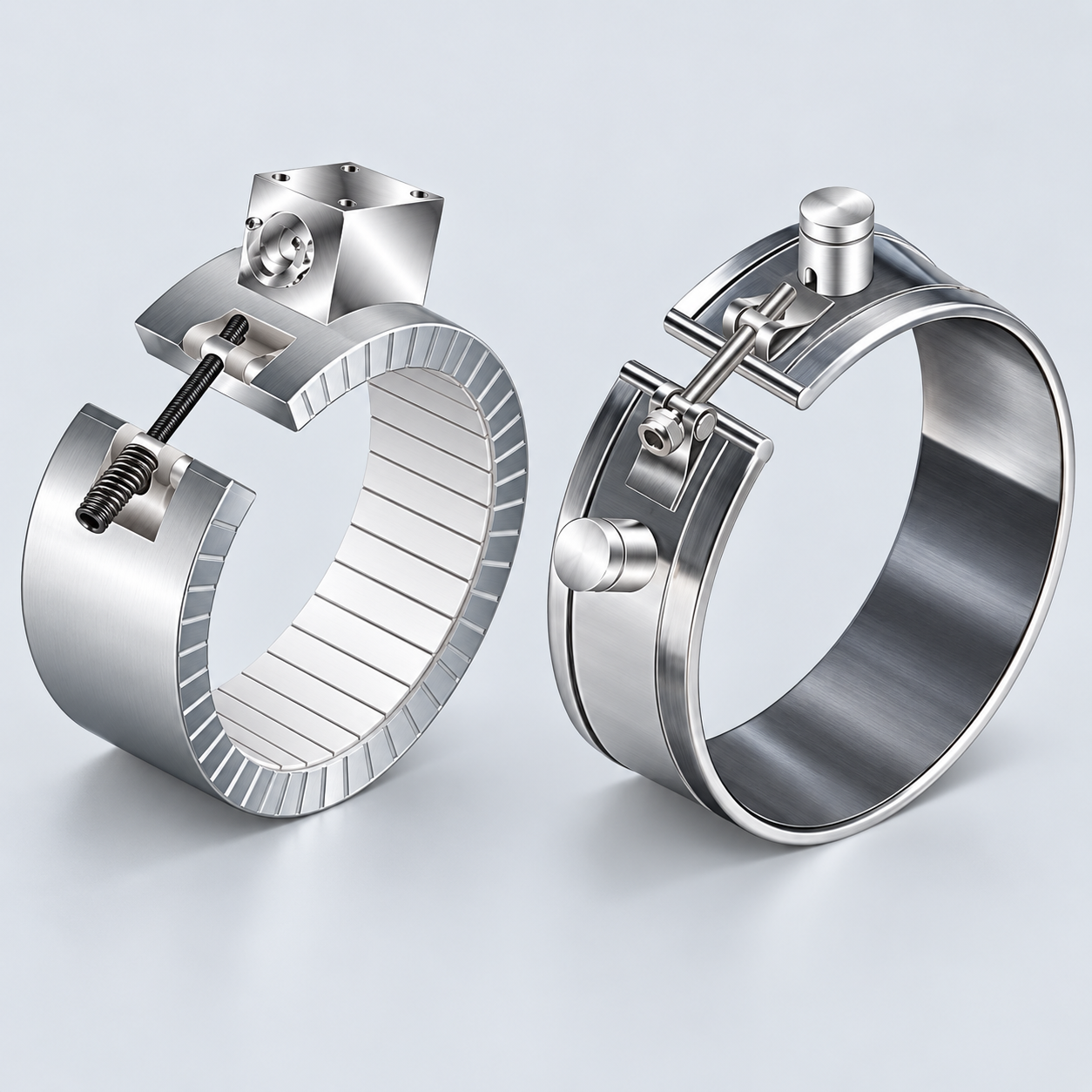 Ceramic and Mica Band and Nozzle Heaters
Barrels, cylinders, pipes and injection nozzles. One piece, split, expandable or partial coverage.
Ceramic and Mica Band and Nozzle Heaters
Barrels, cylinders, pipes and injection nozzles. One piece, split, expandable or partial coverage.
-
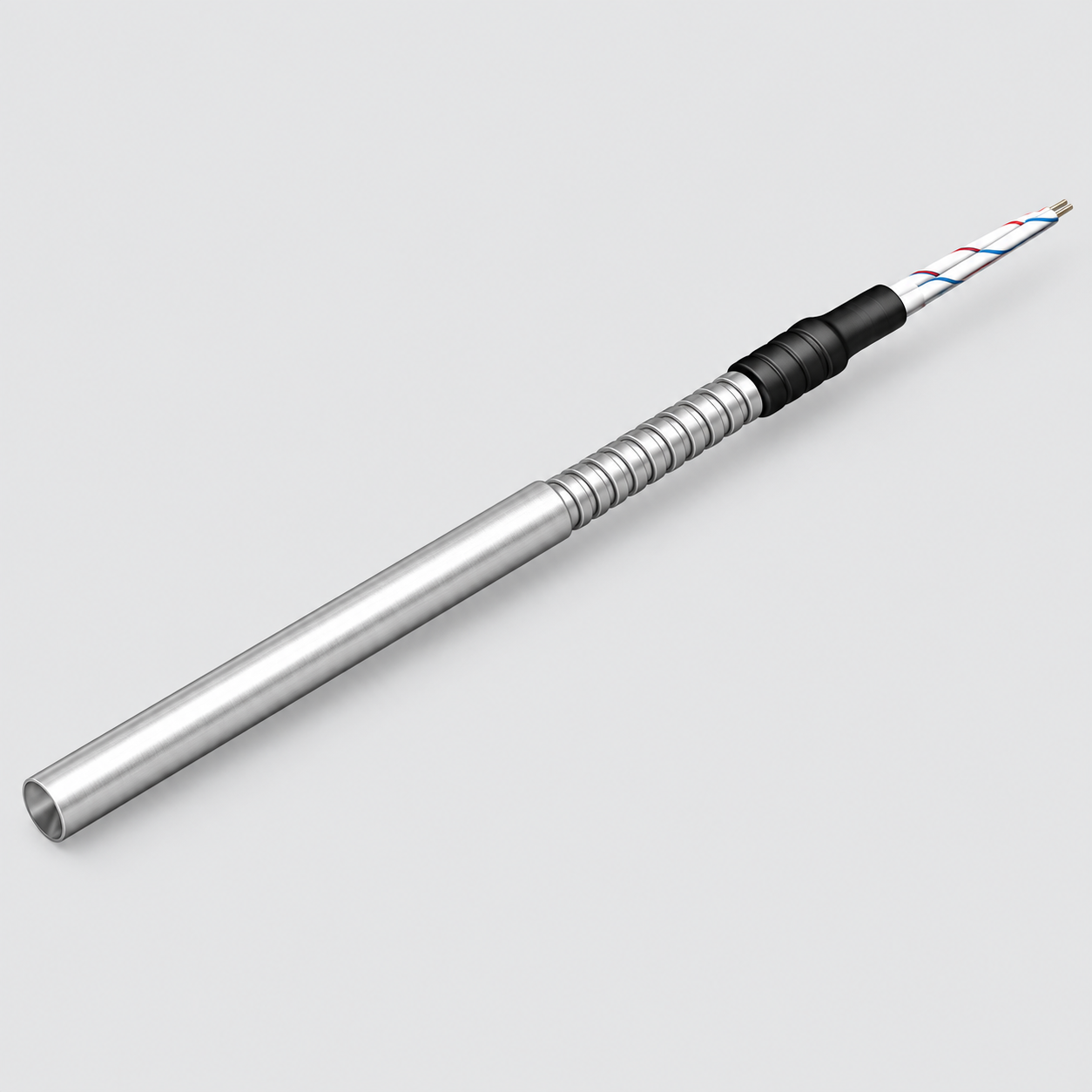 Cartridge Heaters
Bore mounted in moulds, platens and dies. Round, swaged, made to your length.
Cartridge Heaters
Bore mounted in moulds, platens and dies. Round, swaged, made to your length.
Request a quote for strip heaters
Fill in what you know and leave the rest. The whole specification arrives at the works as a single readable email, and anything you leave blank our engineers will propose.